

Picture this: It is a sultry May night in Chennai, Delhi, or Kolkata. The ceiling fan is whirring at full speed—or your split AC is cranking away at 24°C—yet you still wake up drenched in sweat, tossing and turning in discomfort. You check your bedsheet tag, and it proudly boasts a fancy “1000 Thread Count Super Soft Egyptian Cotton.” So why on earth does your bed feel like a plastic sauna wrap?
The truth is, most of what we have been told about buying bed linen in India is a marketing gimmick imported from colder Western countries. When shopping online or stepping into a local handloom store, we are conditioned to believe that higher numbers mean ultimate luxury. But when dealing with Indian climate dynamics—characterized by intense summer heat, sticky coastal humidity, frequent wash cycles, and hard water—a super-high thread count can actually be your worst enemy.
In this comprehensive, weather-tested guide to cotton bedsheet thread count India, we will break down the real science of bed sheet thread count, compare popular choices like 144 TC vs 210 TC bedsheets, examine weave types, and help you choose the best thread count for summer and round-the-year comfort across Indian home environments.
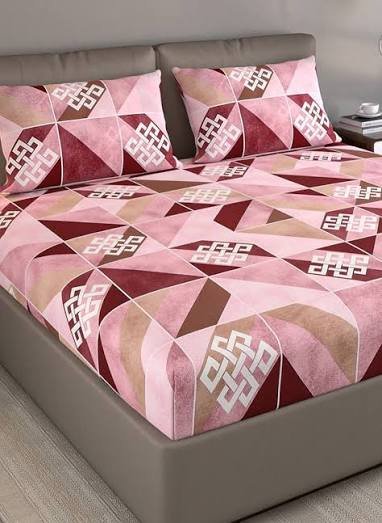
Quick Answer: Best Thread Count for Indian Weather
If you are looking for a quick buying decision before heading to checkout, here is the golden rule tailored specifically for Indian home climates:
The Sweet Spot for India: 180 TC to 210 TC Percale Cotton.
For general Indian weather conditions—combining hot summers, muggy monsoons, and everyday ceiling fan use—a pure cotton bedsheet in the 180 to 210 TC range woven in a percale (plain) weave offers the perfect balance of crisp breathability, softness, sweat absorption, and heavy-duty durability.
- For Extreme Summers & Non-AC Rooms (35°C–45°C): Pick 144 TC to 180 TC Crisp Percale Cotton. Maximum airflow, fast drying after frequent bucket/machine washes.
- For Coastal Cities & High Humidity (Mumbai, Kolkata, Kochi): Pick 180 TC to 210 TC Light Percale. Prevents moisture traps and stays cool against clammy skin.
- For Air-Conditioned Bedrooms (Running 20°C–24°C): Pick 210 TC to 300 TC Sateen or Percale Cotton. Gives a smooth, cozy feel without causing mid-night overheating.
Featured Snippet Target: Bedsheet Thread Count Explained (Comparison Table)
To help you compare options at a glance, here is how different thread counts perform across Indian conditions:
| Thread Count (TC) | Feel & Texture | Breathability | Durability & Washing | Best Indian Climate | Recommended Use |
| 144 TC | Crisp, airy, slightly rustic initially, softens per wash | Maximum airflow; very breathable | High; withstands harsh detergent & sun drying | Hot & Dry Summers, Non-AC Rooms | Everyday summer use, budget-friendly hostellers |
| 180 – 200 TC | Balanced softness, smooth, cool hand-feel | High airflow; quick sweat evaporation | Excellent; great structural integrity | Humid Coastlines, Hot Central/South India | Ideal daily household bedsheet for Indian climate |
| 210 TC (Recommended) | Silky-smooth, premium weight, elegant drape | Optimal airflow + comfortable body warmth | Very High; holds color and weave tightness | Year-round weather across most Indian cities | Best Overall Value: Master bedrooms & guest rooms |
| 300 TC | Luxe, buttery smooth, slightly heavier weight | Moderate airflow; retains mild warmth | Good; requires gentle washing routines | Mild Winters, AC bedrooms (20°C–24°C) | Luxury household bedding, modern apartments |
| 400+ TC (Single-Ply) | Hotel-like sheen, thick, dense texture | Low-to-Moderate airflow | High care needed; slow to line dry | Cold Winters, Constant AC environments | Luxury hotel bedding experience |
| 600 – 1000+ TC | Heavy, stiff, synthetic-like if multi-ply yarn used | Very Low; traps sweat and body heat | Prone to heavy pilling & thread wear in hard water | Not recommended for tropical Indian weather | Marketing trap (Avoid in hot/humid regions) |
What Thread Count Means: Bedsheet Thread Count Explained
Let us demystify the technical jargon. When looking for the ideal cotton bedsheet thread count India buyers frequently encounter the term “TC.” Put simply, Thread Count (TC) refers to the total number of horizontal threads (weft) and vertical threads (warp) woven into one square inch of fabric.
For instance, if a woven fabric square inch contains 100 vertical threads and 110 horizontal threads, its thread count is exactly 210 TC. In basic textile physics, as you pack more threads into a single square inch, the fabric weave naturally becomes tighter, denser, smoother, and heavier.
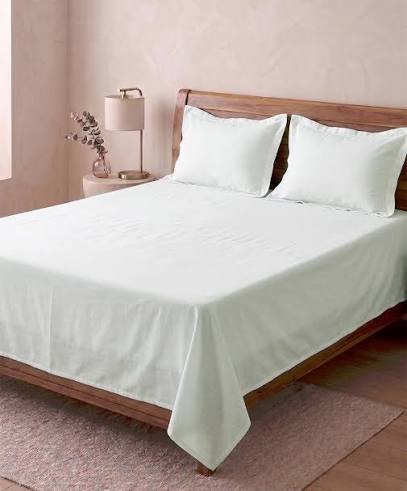
However, thread count is only one dimension of bedsheet quality. Imagine weaving a basket: if you use thick, airy cotton cords, air passes through easily. But if you pack hundreds of thin plastic strings tightly together, no air can pass. This is precisely why a 200 TC long-staple cotton bedsheet will feel vastly superior and far cooler than a bogus “800 TC micro-polyester” bedsheet on a hot April afternoon in Ahmedabad.
Detailed Breakdown: Thread Count Categories for Indian Homes
1. 144 TC Bedsheets: The Lightweight Summer Champion
In Indian retail and traditional markets, 144 TC is the standard baseline for cotton bedding. Many people mistakenly dismiss 144 TC as “low quality,” but for Indian tropical weather, 144 TC pure cotton is a hidden gem.
- Why it works in India: The lower thread density leaves generous microscopic air pockets between yarns. When your ceiling fan circulates air, it easily penetrates the fabric, evaporating sweat instantly.
- Washing & Care: Extremely resilient. It easily handles aggressive hand washing, rough semi-automatic machine washing, harsh detergents, and bright rooftop sun-drying without breaking thread fibers.
- Best Suited For: Non-AC bedrooms during peak May summers, hostel rooms, children’s beds, and budget-conscious daily home use.
2. 180 and 200 TC Bedsheets: The Sweet Spot for Daily Comfort
If 144 TC feels slightly light or crisp, 180 to 200 TC represents the perfect equilibrium between softness and breathability. It strikes an optimal mid-point where the fabric feels noticeably smoother to touch while maintaining great airflow.
- Why it works in India: It offers adequate body without feeling heavy. It absorbs night sweat efficiently without clinging to your body.
- Best Suited For: Coastal regions with high humidity (such as Mumbai, Chennai, Vizag, and Kolkata) where skin gets clammy quickly.
3. 210 TC Bedsheets: The Ultimate All-Rounder
When comparing a 144 TC vs 210 TC bedsheet, the 210 TC option emerges as the golden benchmark for modern Indian urban homes. It provides a luxurious hand-feel that rivals boutique hotel linen while remaining perfectly adapted to local climate demands.
- Why it works in India: A 210 TC bedsheet offers a smooth, rich finish that holds vivid Indian prints (like Block print, Jaipuri Sanganeri, or Kalamkari) beautifully. It maintains cool breathability under fans while keeping you comfortably insulated when the split AC drops the room to 22°C.
- Best Suited For: Master bedrooms, guest rooms, and year-round use across all Indian seasons.
4. 300 TC and Higher: Luxury or Heat Trap?
A true single-ply 300 TC cotton bedsheet feels wonderfully soft, silky, and premium. However, once you cross 300 TC into 400, 500, or 600 TC territory, the weave density increases dramatically.
- Why caution is needed in India: High-density weaves act as thermal insulators. They trap body heat underneath the sheet. Unless your room has continuous 24/7 air conditioning maintained at lower temperatures, 400+ TC sheets will cause night sweats and discomfort in Indian summers. Additionally, high TC fabrics take significantly longer to line dry during monsoon humidity.
Why Very High Thread Count May Be Misleading (The Multi-Ply Trap)
If you search online marketplaces, you will frequently spot bedsheets advertising “800 TC,” “1000 TC,” or even “1200 TC” at shockingly low prices. How is this possible? Welcome to the biggest marketing trick in the bedding industry: Multi-Ply Fiber Manipulations.
💡 Beware of the Math Trick:
Standard high-quality linen uses Single-Ply Yarn (one strong, long cotton fiber twisted into one thread). To inflate numbers artificially, manufacturers twist 3, 4, or 5 cheap, weak, low-grade cotton threads together into a single bundled cord (called Multi-Ply Yarn). They then count each tiny sub-strand individually!
For example, if a loom weaves 200 multi-ply threads (each made of 4 weak strands), dishonest manufacturers market it as 800 TC (200 x 4). In reality:
- The sheet is heavy, stiff, and coarse because of low-grade cotton fibers.
- The dense multi-ply bundles completely block airflow, trapping heat like a plastic sheet.
- After 3 to 4 washes in Indian hard water, these cheap multi-ply strands snap, causing heavy surface fuzz and pilling (small fabric balls).
Takeaway: A genuine single-ply 210 TC pure cotton bedsheet will always outclass and outlive a fake 800 TC multi-ply bedsheet in Indian conditions.
Percale vs Sateen Weave: Which Suits Indian Climate Better?
Even if two bedsheets share the exact same 210 TC rating, they can feel completely different on your skin because of their weave construction. Understanding weave structure is vital when selecting the best thread count for summer and monsoon seasons.
1. Percale Weave (One Over, One Under)
- Structure: A traditional grid-like weave, similar to a classic crisp cotton white shirt.
- Feel: Matte finish, crisp, cool, and lightweight.
- Performance in India: Exceptional airflow, highly breathable, resists sweat retention. Gets softer with every wash.
- Verdict:The absolute winner for Indian summers and humid regions.
2. Sateen Weave (Three or Four Over, One Under)
- Structure: More exposed vertical threads on the fabric surface.
- Feel: Silky-smooth, glossy luster, buttery soft drape.
- Performance in India: Feels luxurious against bare skin, but the dense structure traps slightly more warmth. Requires careful washing to preserve its luster.
- Verdict:Ideal for air-conditioned bedrooms and winter months.
Yarn Quality and Cotton Staple Length: The Hidden Factor
Thread count is merely a headcount of threads; fiber quality is the actual soul of the fabric. The quality of cotton is determined by its staple length (the physical length of individual cotton fibers):
- Short-Staple Cotton (Under 1 1/8 inch): Common in cheap bedding. Has many exposed fiber ends that poke out, causing rough texture and quick pilling after machine washes.
- Long-Staple Cotton (1 1/8 to 1 1/4 inch): Found in high-grade Indian cotton varieties like Shankar-6 or fine combed cotton. Yields smooth, strong, durable yarns that resist fraying.
- Extra-Long Staple (ELS) Cotton (Over 1 3/8 inch): Includes world-famous varieties like Egyptian Cotton, Pima, and India’s finest Suvin Cotton. Produces ultra-fine, silky yarn with incredible strength and luster.
When shopping for a cotton bedsheet thread count India, always prioritize 100% Combed Long-Staple Cotton. A 210 TC long-staple combed cotton bedsheet will feel vastly softer, last twice as long, and remain far cooler than a 400 TC short-staple bedsheet.
Matching Thread Count to Regional Indian Climates
India is a vast sub-continent with diverse regional micro-climates. Here is how you should tailor your thread count selection based on where you live:
1. Hot & Dry Regions (Delhi, Rajasthan, Punjab, MP in Summers)
- Climate Dynamics: Scorching daytime temperatures (40°C–48°C), dry heat, night-time fan cooling.
- Recommended Setup:144 TC to 180 TC Percale Cotton. You need maximum ventilation so that dry air can circulate across the sheet and pull moisture away from your body quickly.
2. Hot & Humid Coastal Belts (Mumbai, Chennai, Kolkata, Kerala, Vizag)
- Climate Dynamics: Heavy humidity year-round, sticky nights, high sweat levels, slow drying times.
- Recommended Setup:180 TC to 210 TC Pure Cotton Percale. Avoid heavy sateen weaves, which stick to sweaty skin. Light percale offers a refreshing, non-tacky feel and dries quickly on indoor drying racks during rainy monsoons.
3. Air-Conditioned Bedrooms (Urban Apartments Nationwide)
- Climate Dynamics: Thermostats set between 18°C and 24°C, controlled indoor ambient moisture, lower air movement.
- Recommended Setup:210 TC to 300 TC Cotton Sateen or Fine Percale. In an AC room, lightweight 144 TC sheets can sometimes feel too thin or chilly. A 210–300 TC sheet offers comfortable substance, silky drape, and cozy body warmth without causing overheating under blankets.
Hotel Bedding vs Household Bedding in India
We all love the crisp, luxurious bed sheets at 5-star hotels in Jaipur or Goa. Naturally, many homeowners try to recreate that exact experience at home by buying heavy 400+ TC bedsheets. However, hotel bedding operations differ vastly from home care:
- Commercial Laundries: Hotels utilize heavy industrial press irons, steam mangles, specialized starch formulations, and water softeners to make high TC sheets look perpetually crisp.
- Home Reality: Washing a thick 400 TC sheet in an Indian home environment—with local hard water, standard washing machine cycles, and bucket washing—often leaves high TC sheets feeling stiff, wrinkled, and difficult to iron.
- The Solution: For daily home use, a 210 TC combed cotton percale sheet gives you 90% of that hotel-crisp freshness while being 100% easier to wash, line-dry, and iron at home!
Essential Care Tips for Indian Cotton Bedsheets
To keep your cotton bedsheets crisp, soft, and long-lasting in Indian water and weather conditions, follow these practical maintenance guidelines:
- Wash Before First Use: Brand-new cotton sheets often carry starch (sizing finishes) from factories. A light first wash opens up the cotton fibers and unleashes natural softness.
- Tackle Hard Water Impact: Mineral deposits in hard water across Indian cities can make cotton fibers stiff over time. Add a cup of white vinegar or a mild water softener to the rinse cycle once a month to dissolve mineral build-up.
- Avoid Harsh Sun Bleaching: While drying clothes in direct Indian sunlight kills bacteria, leaving dark or printed cotton sheets under scorching afternoon sun for hours breaks down cotton fibers and fades dyes. Dry sheets in partial shade or inside-out.
- Skip Heavy Fabric Softeners: Synthetic fabric softeners coat cotton fibers with a chemical wax layer. This clogs the natural pores of cotton, drastically reducing breathability and moisture absorption. Use mild liquid detergents instead.
Frequently Asked Questions (FAQs)
Q1: Which is better for Indian summers: 144 TC vs 210 TC bedsheet?
Answer: Both are excellent, but serve slightly different preferences. If you live in a non-AC room with high summer heat, a 144 TC percale bedsheet provides maximum air circulation and fast drying. If you sleep with an air conditioner or want a smoother, slightly softer hand-feel, a 210 TC pure cotton bedsheet is the ideal choice.
Q2: What is the best thread count for summer in India?
Answer: The best thread count for summer in India ranges between 180 TC and 210 TC in a percale (plain) weave. This range delivers high breathability, efficient sweat absorption, and durable performance against frequent summer washing.
Q3: Is a higher thread count always better quality?
Answer: No! Higher thread count does not automatically mean better quality. Fiber quality (long-staple combed cotton) and weave type (percale vs sateen) matter far more. Thread counts above 400 often use inflated multi-ply yarn tricks that make fabric heavy, hot, prone to pilling, and unsuitable for tropical Indian weather.
Q4: Does higher thread count bedsheet shrink more after washing?
Answer: Shrinkage depends on whether the cotton fabric was pre-shrunk (sanforized) during manufacturing, rather than thread count alone. However, pure cotton bedsheets may shrink 3% to 5% during their initial wash in warm water. Always choose pre-shrunk cotton bedsheets from reputable Indian brands.
Q5: Why do my high thread count bedsheets get fabric pills (chhoti booti)?
Answer: Pilling happens when short, weak cotton fibers snap and rub together during washing. Fake high TC sheets made of multi-ply yarns or synthetic blends (polycotton) pill very easily in hard water. Stick to 100% single-ply long-staple combed cotton in the 180 to 210 TC range to prevent pilling completely.
Final Verdict: How to Choose the Perfect Cotton Bedsheet Thread Count in India
When shopping for bed sheets in India, do not let flashy high-number marketing confuse you. Bedding quality is a harmonious blend of fiber staple length, weave type, and thread density.
For Indian homes, where comfort, sweat management, air circulation, and ease of washing are paramount, the sweet spot for a cotton bedsheet thread count India is undeniably 180 TC to 210 TC Percale Cotton. It yields a sheet that is cool against your skin, durable across hundreds of wash cycles, easy to line dry, and pleasantly soft every single night.
Next time you refresh you look at home linen collection or your favorite bedding boutique, look beyond inflated thread count numbers. Focus on 100% pure long-staple cotton, pick percale for summers and sateen for AC comfort, and enjoy restful, cool sleep all year round!
See Also
- Choosing the Right Bedsheet Thread Count for Your Comfort
- What is the thread Count for Sheets? The Best Thread Count For Sheets-Is Heigher Really Better?
- Bedsheet Size Chart India: Single, Double, Queen and King Sizes
- Cotton Comforter vs. Dohar: The Ultimate Indian Bedding Showdown
- Sour Monsoon Smell? How to Deep Clean and Refresh Cotton Dohars
