

Ah, the Indian monsoon! After months of scorching summer heat, the first few showers feel like absolute bliss. You make yourself a hot cup of adrak wali chai, plate up some crispy pyaaz ke pakodas, and look forward to snuggling under your favorite lightweight cotton dohar.
But as you pull it up to your chin, instead of that comforting, clean-linen scent, you get a whiff of it.
That unmistakable, damp, sour, and downright funky smell.
It’s the classic Indian monsoon struggle. High humidity turns our beloved, breathable summer blankets into moisture magnets. If your favorite layers are currently smelling like a damp basement, don’t worry. You don’t have to lock them away or tolerate the funk.
In this comprehensive guide, we will look at exactly how to clean cotton dohar layers properly, banish those stubborn odors, and ensure your monsoon linen care routine keeps your bedding as fresh as a morning breeze.
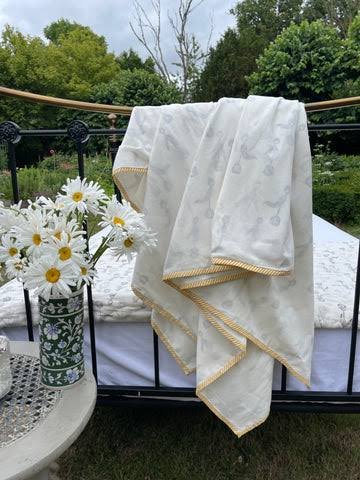
The Science of Humidity: Why Cotton Traps Foul Damp Odors
Before we jump into the cleaning hacks, let’s look at a bit of science to understand why this happens. Why do our gorgeous cotton dohars bear the brunt of the monsoon fustiness compared to synthetic blankets?
Cotton is a natural fiber, and it loves water. It is incredibly porous and hygroscopic, meaning it actively absorbs moisture from the surrounding air. During the Indian monsoon, the relative humidity often crosses 80% to 90%. Because the air is already saturated with water, the moisture that your dohar absorbs from the atmosphere (and from your body sweat at night) has nowhere to go. It just sits there.
When fabric remains damp for more than 24 to 48 hours, it becomes the ultimate breeding ground for microscopic fungi, mold, and mildew spores. These tiny organisms feast on the organic matter in cotton fibers, sweat residues, and dead skin cells. The byproduct of this feast? A volatile organic compound that hits your nose as that sour, musty odor.
If you don’t learn how to clean cotton dohar blankets correctly to kill these spores, simply masking it with heavily scented detergents or fabric conditioners will actually make it worse. The artificial fragrance mixes with the mold smell, creating a truly chaotic scent profile that you definitely don’t want near your face while sleeping!
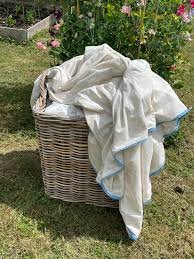
3 Steps to Deodorize Your Dohars Without Fabric Damage
A cotton dohar is a delicate piece of bedding. Made by sandwiching a soft layer of combed cotton flannel between two layers of fine mulmul or cotton voile, it requires gentle handling. You cannot simply blast it with harsh chemical bleaches or hot water cycles that might shrink the inner flannel or fade those beautiful Jaipur block prints.
Here is a foolproof, three-step method to safely wash cotton dohar layers and remove musty smell from blankets without causing any structural or aesthetic damage.
1. The Baking Soda Dry Lift
If your dohar isn’t visibly dirty but has just caught that annoying damp air smell, you don’t necessarily need to run it through a full wet wash cycle immediately. Instead, use sodium bicarbonate—good old baking soda. Baking soda is an amphoteric substance, meaning it chemically neutralizes both strong acidic and basic odor molecules rather than just masking them.
- How to do it: Spread your dry dohar completely flat on a clean bed or a large mat. Take a fine sieve and dust a generous, even layer of baking soda across the entire surface.
- Let it sit: Leave it undisturbed for at least 45 to 60 minutes. The baking soda will actively draw out moisture and absorb the foul odors trapped within the fine cotton weave.
- The removal: Take the dohar outside to your balcony or veranda and give it a vigorous shake to remove the powder. Alternatively, you can use a upholstery brush attachment on your vacuum cleaner on a low-suction setting to clean it off.
2. The Vinegar-Infused Machine Rinse Cycle
If the sour smell persists, it’s time for a deep wash. To properly wash cotton dohar blankets while preserving their softness, you need to ditch the commercial fabric softeners. Fabric softeners leave a chemical coating on cotton fibers that traps moisture and bacteria over time, making the musty smell return even faster next time. Instead, reach for white vinegar.
- The Prep: Place your dohar in the washing machine. Select a gentle, delicate, or hand-wash cycle with cold or lukewarm water.
- The Wash: Add a mild, eco-friendly liquid detergent (about half the amount you usually use). Avoid powder detergents during monsoon as they might not dissolve completely in cold water and can leave residue in the layers.
- The Secret Weapon: During the rinse cycle, open the detergent drawer and pour in one cup of distilled white vinegar. The acetic acid in vinegar acts as a natural sanitizer, breaking down the fungal spores causing the bad odor and stripping away any old detergent buildup. Don’t worry—your dohar won’t smell like salad dressing; the vinegar scent rinses out completely, leaving the fabric completely neutral and fresh.
3. Correct Indoor Fan-Drying Tactics
The biggest challenge of monsoon linen care in India is the complete absence of reliable sunlight. Ideally, you want to sun-dry bedding because UV rays are natural disinfectants. However, when it’s pouring outside for days on end, you have to master indoor drying to prevent the musty smell from returning while the fabric is wet.
- Maximize the Spin: Ensure your washing machine executes a high-speed spin cycle to extract as much excess water as possible before you take the dohar out.
- Avoid Bundling: Never hang a wet dohar folded in multiple layers over a clothes rack. Spread it out as widely as possible across multiple lines or over the backs of clean wooden or plastic chairs.
- The Ceiling Fan Airflow: Position your drying rack directly under a ceiling fan running at maximum speed. Air circulation is your best friend here; moving air evaporates water molecules vastly quicker than stagnant air.
- The Exhaust/Dehumidifier Trick: If you have an air conditioner with a “Dry Mode,” running it in the room where your dohar is drying will pull the moisture right out of the air, drying your blanket in record time. Alternatively, running a bathroom exhaust fan nearby helps keep the room’s air fresh.
Storing Your Bed Linens to Avoid Winter and Monsoon Fustiness
Once you have successfully learned how to clean cotton dohar fabrics and they are bone-dry, your job isn’t quite done. Storing them improperly in a humid wardrobe will bring you right back to square one within a week.
When storing your cotton blankets during high-humidity seasons, keep these essential tips in mind:
| Storage Do’s | Storage Don’ts |
| Do ensure the dohar is 100% dry before folding. Even 1% residual moisture will cause mold. | Don’t store your cotton linens in airtight plastic bags or vacuum seals, as plastic traps residual humidity inside. |
| Do use breathable cotton storage bags or wrap them in old muslin sheets to allow air exchange. | Don’t let your bedding touch the bare wooden back or bottom of wardrobes, which easily absorb wall dampness. |
| Do place natural moisture absorbers like silica gel pouches or activated charcoal blocks in your cupboards. | Don’t use strong napthalene balls directly against the fabric, as the chemical smell is incredibly hard to wash out of mulmul. |
Pro-Tip: Want a pleasant, natural scent? Toss a few dried neem leaves or a small sachet of dried lavender/camphor wrapped in tissue paper into your linen closet. Camphor not only repels insects but also actively keeps the air inside the wardrobe smelling crisp and clean throughout the heavy downpours.
Summary
Getting rid of that stubborn, sour monsoon smell from your cotton dohars doesn’t require harsh chemicals or expensive dry-cleaning bills. By understanding that humidity creates an ideal environment for odor-causing mold spores, you can combat the issue systematically.
Use the baking soda dry lift for quick touch-ups, swap out chemical fabric softeners for a vinegar-infused machine rinse when you wash cotton dohar sheets, and maximize indoor airflow to mimic the effects of being able to sun-dry bedding. Follow up with smart, breathable storage choices, and your lightweight blankets will remain soft, cozy, and wonderfully fresh all year round.
Happy snuggling, and enjoy the rains!

[…] Sour Monsoon Smell? How to Deep Clean and Refresh Cotton Dohars […]