

We have all been there. It is 2:00 AM, the air conditioner is blasting at a crisp 22°C, and you are caught in the classic midnight dilemma. One minute you are shivering under the blast of cold air, pulling the sheet up to your chin. The next minute, you are sweating because your heavy blanket feels like a personal sauna. You kick it off, only to wake up freezing ten minutes later. So, what is the difference between cotton comforter vs dohar
Welcome to the great Indian AC room struggle! Balancing the blistering tropical heat outside with the artificial chill inside is a fine art. And honestly, your regular winter razai (heavy quilt) or a flimsy single bed sheet just won’t cut it.
To survive this nightly battle, Indian homes typically rely on two major champions: the traditional Indian Dohar and the modern Cotton Comforter. Both claim to be the ultimate AC blanket, but they are built entirely differently.
So, in the ultimate matchup of cotton comforter vs dohar, which one deserves a permanent spot on your mattress? Let us break down the materials, warmth levels, and seasonal compatibility to help you choose the perfect bedding for a blissful night’s sleep.
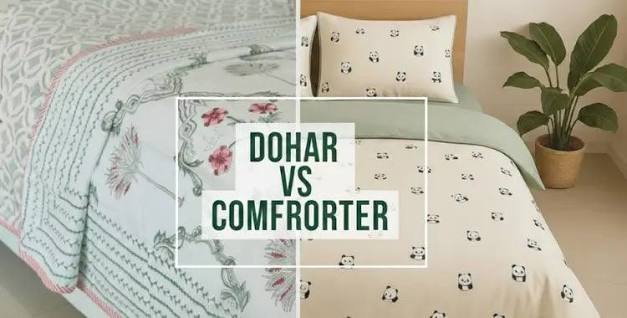
Defining the Indian Dohar: The Heritage AC Blanket
Let’s start with a homegrown classic that has been keeping Indian households comfortable for generations. The word Dohar essentially means “layered” or “folded,” which perfectly describes how this timeless piece of Indian bedding is made.

The Architecture of a Dohar
Unlike modern filled blankets, a traditional Indian dohar does not contain any loose fiber-fill, wool, or cotton batting. Instead, it relies on a unique three-layer structure:
- Top Layer: A sheet of ultra-soft, fine mulmul cotton (muslin fabric).
- Middle Layer: A hidden layer of fine cotton fabric, often featuring beautiful traditional block prints (like Jaipur block prints) that softly peek through the outer sheets.
- Bottom Layer: Another matching sheet of premium mulmul cotton that rests gently against your skin.
These three layers are stitched together along the borders with a distinct piping edge. Because there is no heavy insulation inside, a dohar is incredibly lightweight and folds down into a tiny square, making it easy to store in any Indian wardrobe.
Why It Excels in an AC Environment
The beauty of a dohar lies in its supreme breathability. Pure mulmul cotton has an open weave that allows body heat to escape while preventing the cold air from the air conditioner from directly hitting your body. It provides a mild, gentle barrier. If you like to set your AC to a moderate 24°C or 25°C just to take the edge off a sweltering summer night, a dohar offers the perfect amount of light insulation without causing any sweat buildup.
Defining the Cotton Comforter: The Cozy Modern Retreat
On the other side of the ring, we have the modern cotton comforter. If your idea of perfect sleep is sinking into a fluffy, cloud-like hotel bed while the air conditioner turns your room into a mini hill station, this is the contender you are looking for.

The Architecture of a Comforter
A comforter is a thick, quilted blanket. Its construction is fundamentally different from a dohar:
- The Shell: The outer fabric envelope is ideally made of breathable pure cotton or a cotton-sateen blend to keep it skin-friendly.
- The Filling: Inside the shell lies a generous layer of pre-washed cotton batting or hypoallergenic microfiber-fill (usually ranging from 150 to 300 GSM—Grams per Square Meter).
- The Quilting: To stop the inner fluff from sliding to one corner when you wash it, the entire blanket is stitched through in a grid, diamond, or box-stitch pattern.
This trapped air inside the filling acts as an excellent insulator, capturing your natural body warmth and holding it close to you.
Why It Excels in an AC Environment
If you are someone who cranks the AC down to 18°C to 20°C, a thin dohar won’t hold enough heat to keep you comfortable. You need a cotton comforter. It provides that luxurious weight and plush coziness that mimics a premium hotel experience. The cotton outer shell ensures that even though the blanket is thick, it remains relatively breathable compared to cheap, fully synthetic polyester blankets that trap sweat.
Climate Matching: Hot Summer vs. Crisp Monsoon Nights
India doesn’t just have one type of warm weather; our climate shifts drastically from dry, blazing heat to oppressive humidity. Choosing between a cotton comforter vs dohar depends heavily on how the weather outside interacts with your indoor climate control.
1. The Blazing Dry Summer (April to June)
When the midday temperature outside crosses 40°C, your bedroom walls absorb heat all day. Even with the AC running, you want your bedding to feel as weightless as possible.
- The Winner: Dohar.
- Why: Its triple-layer muslin design provides a cool-to-the-touch sensation. It handles sweat beautifully because cotton absorbs moisture and allows it to evaporate quickly in the dry air.
2. The Humid Monsoon Season (July to September)
Monsoon brings a distinct drop in outdoor temperatures, but the indoor humidity skyrockets. This is when the air from your AC can start to feel damp and piercingly cold.
- The Winner: Cotton Comforter (Lightweight / All-Weather).
- Why: A dohar can sometimes feel slightly damp or inadequate against a damp, rainy midnight chill. A light quilted comforter provides the necessary warmth to cut through the dampness of a monsoon night, keeping you perfectly cozy.
3. The Transitional Light Winter (October to November)
Before the heavy north Indian winter sets in, there is a phase where you don’t need the heavy winter quilts, but you still need a solid layer of protection.
- The Winner: Cotton Comforter.
- Why: The fiber-fill insulation provides a protective cocoon against early morning drops in temperature, ensuring you don’t wake up with a stiff neck or a sudden case of the sniffles.
Summary Matrix: Cotton Comforter vs. Dohar
To make your buying choice as straightforward as possible, let’s look at a quick head-to-head comparison across the parameters that matter most to Indian households.
| Features | Indian Mulmul Dohar | Quilted Cotton Comforter |
| Material Structure | 3 layers of fine muslin/mulmul fabric | Fiber-fill/cotton batting quilted inside a cotton shell |
| Weight Profile | Ultra-lightweight and airy | Medium-weight, plush, and fluffy |
| Ideal AC Temperature | Best for 24°C to 26°C | Best for 18°C to 23°C |
| Primary Season | Peak summers and humid coastal weather | Monsoon, light winters, and high-blast AC rooms |
| Maintenance & Washing | Extremely easy to machine wash at home; dries very fast | Requires a larger washing machine; takes longer to air dry |
| Storage Space Needed | Minimal; rolls up into a compact size | Moderate; requires a dedicated shelf or vacuum bag |
| Longevity | Becomes softer with every single wash | Filling can flatten slightly over years of heavy use |
Fabric & Maintenance: Real-World Tips for Indian Homes
When buying premium bedding online or from local markets, the specifications on the label can easily get confusing. Keep these practical factors in mind before making your final selection.
Decoding the GSM Metric
When shopping for a cotton comforter, you will frequently see the term GSM (Grams per Square Meter). This measures the weight and density of the filling inside.
- 100 to 150 GSM: This is categorized as an “All-Weather” or “AC Comforter.” It is thin, highly flexible, and custom-made for air-conditioned rooms.
- 200 to 300+ GSM: This is a heavy-duty winter comforter. Unless you run your AC at sub-zero temperatures, this will likely feel too hot for summer use.
For a dohar, manufacturers don’t typically use GSM. Instead, look for 100% long-staple cotton or Mulmul. Avoid microfiber or polyester variants if you are prone to skin irritation or nighttime sweating.
Washing and Maintenance Reality Check
Let’s talk about the practical side of Indian households: dust, sweat, and spilling morning chai on the bed.
- Dohars are a dream to maintain. You can toss them into a standard home washing machine on a gentle cycle, hang them on the balcony, and they will dry completely in less than two hours under the Indian sun. Plus, the more you wash pure mulmul, the softer it gets.
- Comforters need a bit more care. A double-bed comforter can get quite heavy when wet, which might strain a small 6 kg home washing machine. They also take a full day to dry completely. Pro-tip: Always buy a comforter that is machine-washable, or use a separate duvet cover over it so you only have to wash the cover regularly rather than the bulky insert.
Final Verdict: Which One Should You Buy?
At the end of the day, choosing between a cotton comforter vs dohar comes down to your personal sleep style and how you run your home.
Buy an Indian Dohar if:
- You live in a hot, coastal area (like Mumbai, Chennai, or Kolkata) where humidity is a constant companion.
- You prefer a weightless feel over your body when sleeping.
- You keep your air conditioner at a moderate, energy-saving temperature (24°C–26°C).
- You want something incredibly easy to wash, dry, and tuck away in small closets.
Buy a Cotton Comforter if:
- You love the heavy, reassuring, cozy pressure of hotel bedding.
- You or your partner like to turn the bedroom into an icebox at night.
- You are looking for versatile bedding that can easily handle both rainy monsoons and light north Indian winters.
- You have ample storage space and don’t mind a slightly heavier laundry routine.
Whichever option you choose, investing in high-quality, pure cotton bedding ensures that your skin breathes easily all night long. Say goodbye to the midnight temperature battles and hello to uninterrupted, peaceful sleep!
See Also
What is the difference between Dohar, Quilt & Comforter?
Coir vs. Jute Rugs: A Head-to-Head Natural Fiber Comparison
Bed Sheet vs. Bed Cover: Are You Using Them Correctly?
Bedsheet Size Chart India: Single, Double, Queen and King Sizes

[…] Cotton Comforter vs. Dohar: The Ultimate Indian Bedding Showdown […]