

When you step into an Indian household, floor coverings are often the unsung heroes of interior décor. From vibrant handloom dhurries spread out in living rooms to plush area rugs defining cozy corners, floor textiles add warmth, color, and character to any space.
However, when shopping for floor coverings online or visiting local artisan markets, terms like dhurrie, rug, and carpet are often used interchangeably. Are they really the same thing?
The short answer is no. While all three cover your floors, they differ significantly in construction, pile height, materials, portability, reversibility, and maintenance.
If you are renovating your home or simply trying to pick the right floor covering for Indian summers, monsoon humidity, kids, or pets, this ultimate guide will break down to Dhurrie vs Rug vs Carpet to specifically dhurrie vs carpet and dhurrie vs rug debate in plain, simple language.
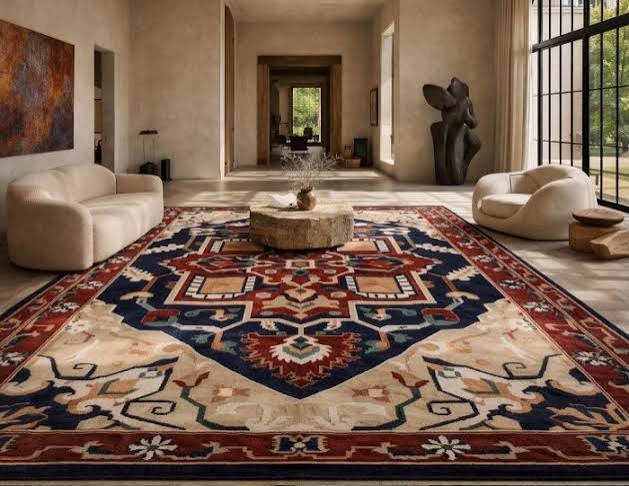
Quick Comparison Table
To give you an instant overview, here is a handy breakdown of how these three popular floor coverings compare across key features.
| Feature | Dhurrie (Durrie) | Rug | Carpet |
| Construction | Flatweave (no pile) woven on traditional handlooms | Tufted, knotted, or woven with medium-to-high pile | Machine or hand-tufted/knotted with heavy pile |
| Pile Type | Zero pile (flat surface) | Low, medium, or high pile (plush) | Medium to high pile (thick & cushioned) |
| Primary Materials | Cotton, wool, jute, coir, banana fiber | Wool, silk, cotton, synthetic blends | Wool, nylon, polyester, polypropylene |
| Reversibility | 100% Reversible (identical design on both sides) | Rarely reversible (has a distinct backing) | Non-reversible (usually fitted with heavy backing) |
| Portability & Weight | Lightweight, easily foldable, highly portable | Moderately heavy, rollable | Heavy; difficult to move or wall-to-wall fixed |
| Cleaning & Maintenance | Machine washable or easy spot cleaning | Professional dry cleaning or regular vacuuming | Heavy vacuuming and professional steam cleaning |
| Best Room Use | Living rooms, bedrooms, balconies, high-traffic corridors | Living room seating areas, dining spaces, bedrooms | Air-conditioned bedrooms, home theaters, luxury lounges |
| Ideal Climate | Perfect for hot Indian summers & humid monsoons | Great for year-round indoor use | Ideal for cooler regions or air-conditioned rooms |
What is a Dhurrie? Understanding the Durrie Meaning & Origin
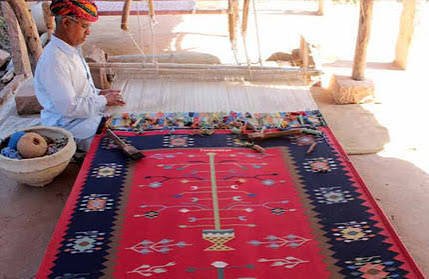
To truly understand the durrie meaning, we have to look back at traditional Indian weaving heritage. A dhurrie (also spelled durrie or durry) is a traditional, hand-woven Indian flatweave floor covering.
Unlike plush carpets that feature standing yarns (pile), a dhurrie is crafted by tightly interlacing warp and weft threads on traditional pit looms or frame looms. The result is a smooth, thin, zero-pile fabric floor covering.
Historically used for everything from village gatherings and meditation mats to grand royal palace floorings in Rajasthan and Punjab, dhurries are prized for their geometric patterns, ethnic motifs, and incredible utility.

Key Characteristics of a Dhurrie:
- Zero-pile flatweave construction: Easy to sweep and doesn’t trap dust or pet hair easily.
- 100% Reversible: Both sides feature the exact same pattern and texture.
- Lightweight and foldable: You can fold a cotton dhurrie just like a bedsheet or thick blanket.
- Eco-friendly materials: Crafted primarily from natural fibers like cotton, wool, jute, coir, or recycled textile yarn.
What is a Rug?
A rug is an area floor covering that covers a specific portion of a room rather than extending across the entire floor from wall to wall. Rugs come in various shapes (rectangular, round, runner, oval) and can feature low, medium, or thick plush piles.
Rugs act as anchor pieces in modern interior design. Placing a rug beneath a coffee table, dining set, or bed frames a specific functional zone within a larger room.
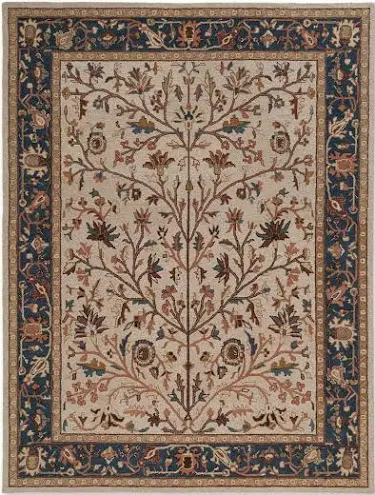
Key Characteristics of a Rug:
- Defined dimensions: Usually manufactured in standard sizes like 4×6 ft, 5×8 ft, 8×10 ft, or 9×12 ft.
- Varying pile heights: Can range from flatweave wool to ultra-plush shaggy piles.
- Distinct backing: Most rugs have a defined bottom side, often reinforced with latex or canvas backing to retain shape.
- Design versatility: Available in traditional Persian motifs, modern abstract prints, or Scandinavian minimalist textures.
What is a Carpet?
In traditional home textile terms, a carpet refers to a heavy, thick floor covering that either covers the entire floor area (wall-to-wall carpeting) or spans a very large surface area.
In India, when people speak of a carpet, they are usually referring to thick, hand-knotted wool or silk floor coverings (such as Kashmir or Bhadohi hand-knotted carpets) or heavy machine-tufted coverings designed for warmth and acoustic cushioning.
Key Characteristics of a Carpet:
- High pile and cushion: Thick fibers absorb sound and feel luxuriously soft underfoot.
- Heavyweight construction: Stays firmly in place due to its substantial weight and heavy backing.
- Thermal insulation: Traps heat, making it ideal for colder climates or air-conditioned spaces.
- Substantial investment: Authentic hand-knotted wool and silk carpets are heirloom pieces that can last for generations.
Flatweave Versus Pile Construction: The Core Difference
When analyzing the rug carpet and dhurrie difference, the single most important factor to understand is pile height and weaving construction.
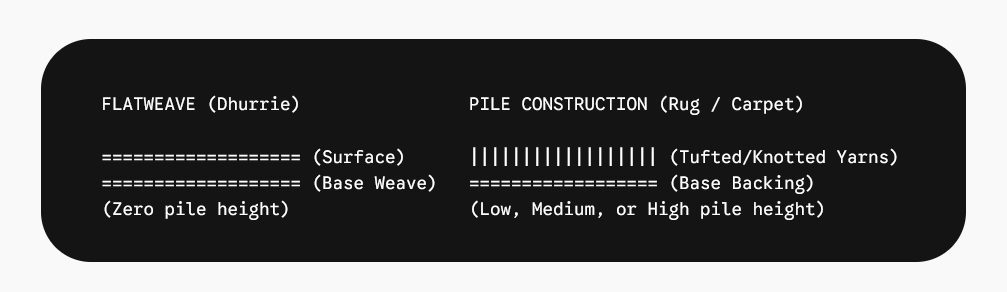
1. Flatweave Construction (Dhurries)
In a flatweave, weavers interlace the vertical warp threads and horizontal weft threads on a loom. There are no loops or knots sticking upward. Because there is no vertical pile:
- Dust, grit, and debris stay on the surface rather than settling deep into fibers.
- The floor covering remains thin, lightweight, and cool to the touch.
2. Pile Construction (Rugs and Carpets)
Rugs and carpets use a technique where yarns are knotted or tufted into a base fabric, creating raised loops or cut strands that stand upright.
- Low Pile (< 1/4 inch): Smooth, sturdy, easy to vacuum (common in dining room rugs).
- Medium Pile (1/4 to 1/2 inch): Soft and supportive (great for living room area rugs).
- High/Shag Pile (> 1/2 inch): Extremely plush, soft, and luxurious (ideal for cozy bedroom corners).
Comparing Materials: Cotton, Wool, Jute, Coir, and Synthetics
The material you choose directly impacts comfort, longevity, and ease of cleaning in Indian environmental conditions.
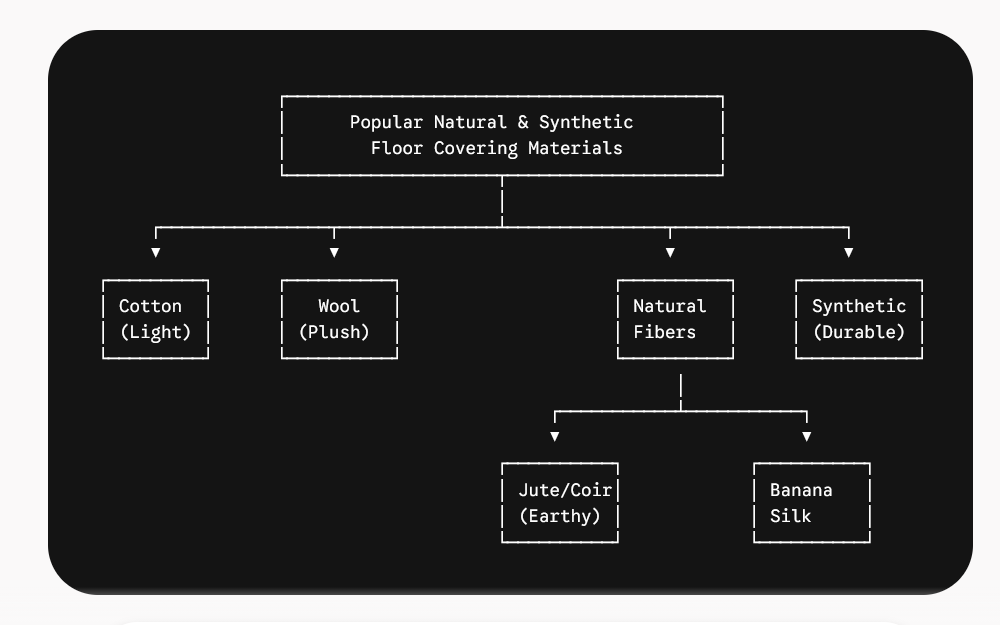
Cotton
- Best used in: Dhurries and thin cotton area rugs.
- Pros: Breathable, soft, affordable, lightweight, and machine washable.
- Cons: Prone to shrinking or wrinkling if not washed carefully.
Wool
- Best used in: Premium dhurries, hand-knotted rugs, and traditional carpets.
- Pros: Naturally dirt-repellent, durable, soft, and excellent for natural warmth.
- Cons: Higher price point; requires professional cleaning for thick pile options.
Jute and Coir
- Best used in: Sustainable flatweave dhurries, rug runners, and natural doormats.
- Pros: Eco-friendly, highly durable, earthy aesthetic, and highly resistant to daily wear.
- Cons: Coarse texture underfoot; sensitive to excessive water or direct moisture absorption.
Synthetics (Nylon, Polyester, Polypropylene)
- Best used in: Machine-made modern area rugs and budget carpets.
- Pros: Stain-resistant, highly affordable, vivid color retention.
- Cons: Synthetic feel, static attraction, non-biodegradable.
Which Option Is Reversible?
If reversibility is high on your priority list, the winner is clear: The Dhurrie.
Because a traditional dhurrie is flatwoven without a glue-down or canvas backing, the geometric pattern on the top face is duplicated on the reverse side. If your dhurrie catches a minor tea stain or looks dusty during a family gathering, you can simply flip it over for an instant, fresh look!
In contrast, most modern tufted rugs and fitted carpets feature a non-reversible latex, canvas, or jute mesh backing to keep the tufted pile knots secure.
Best Option for Indian Summers
Navigating tropical humidity and scorching summer temperatures requires floor coverings that breathe easily.
During peak summer months in cities like Delhi, Bengaluru, Mumbai, or Chennai, thick wool carpets or plush shags trap indoor heat and absorb ambient humidity, making rooms feel warm and heavy.
A lightweight cotton or jute flatweave dhurrie is the ideal solution for Indian summers:
- Breathable weaving: Allows smooth air circulation between the floor and the room.
- Cool underfoot: Does not retain body heat or trap ambient room temperatures.
- Easy season switching: You can roll up your winter rugs, store them safely, and lay down breezy dhurries to refresh your living space.
Best Option for Homes with Children or Pets
If your household features energetic kids, dogs, or cats, selecting the right floor textile comes down to durability and ease of cleanup.
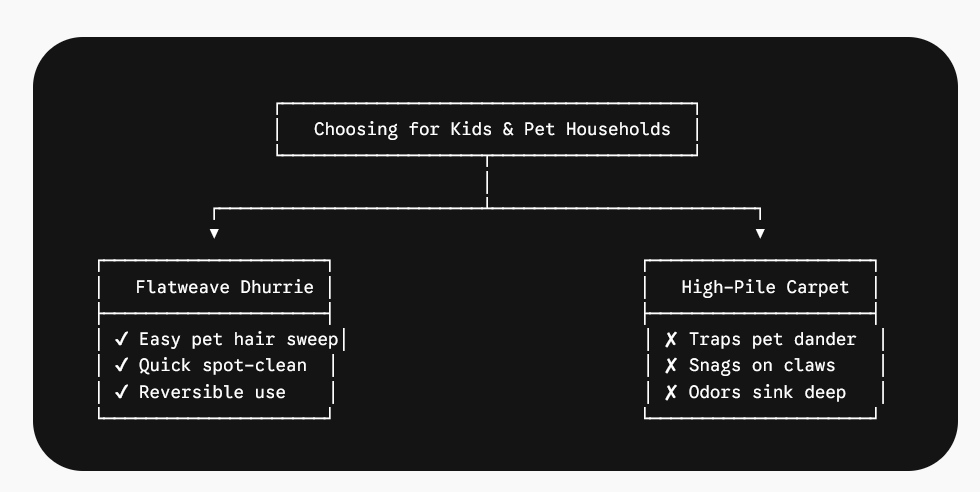
Why Dhurries and Low-Pile Rugs Excel for Families:
- Pet Hair Removal: Pet fur sits right on top of a flatweave surface and can be swept or vacuumed off in seconds. High-pile carpets trap dander, dust mites, and hair deep near the backing grid.
- Accident Resilience: Spilled juices, food crumbs, or mud tracks are easy to spot-clean on flat surfaces. Small cotton dhurries can even be tossed into a gentle home washing cycle.
- No Claw Snagging: Loop-pile carpets can snag on pet claws, leading to loose threads. Flatweave dhurries resist claw pulling far better.
Pro-Tip: Pair your dhurrie or rug with a high-quality natural coir doormat at entryway doors to trap mud, dirt, and dust before kids and pets track them across your living room floors.
Maintenance Differences: Cleaning Your Floor Coverings
Proper care extends the life of your home textiles. Here is how maintenance requirements differ across options:
  CARE LEVEL
  High   ▲                                  [ Thick Wool/Silk Carpet ]
         │                                  (Professional Steam Cleaning)
         │
  Medium │            [ Area Rug ]
         │       (Vacuuming & Spot Clean)
         │
  Low    │ [ Cotton/Jute Dhurrie ]
         ▼    (Easy Sweep/Washable)
         └───────────────────────────────────────────────────────────►
Cleaning a Dhurrie:
- Routine Care: Daily sweeping with a traditional Indian broom (jhadu) or low-suction vacuuming.
- Deep Cleaning: Small cotton dhurries can be hand-washed or machine-washed in cold water using a mild detergent. Dry flat in shaded outdoor sunlight to prevent fading.
Cleaning a Rug:
- Routine Care: Regular vacuuming (once or twice a week) using a suction attachment.
- Deep Cleaning: Immediate spot-cleaning with mild carpet shampoo for spills. Professional dry cleaning once every 12–18 months.
Cleaning a Carpet:
- Routine Care: Heavy-duty vacuuming with a rotating brush head to pull dirt out from deep within the pile.
- Deep Cleaning: Requires professional steam extraction or specialized dry-chemical carpet cleaning to prevent moisture entrapment under the heavy backing.
Price and Durability Comparison
Budget and longevity are major considerations when investing in home decor.
- Dhurries (Budget to Mid-Range): Highly affordable due to simple flatweave mechanics, yet exceptionally durable. High-quality cotton or hand-spun wool dhurries can easily last 5 to 15 years with minimal maintenance.
- Rugs (Mid-Range to Premium): Prices vary widely based on production style (machine-tufted vs. hand-tufted vs. hand-knotted). A good wool area rug offers a lifespan of 10 to 25 years.
- Carpets (Premium to Investment): Authentic, hand-knotted wool or silk carpets represent higher upfront investments. However, their structural integrity and heirloom value allow them to last 30 to 100+ years when properly preserved.
How to Identify a Genuine Handmade Dhurrie
With machine-made synthetic imitations filling online marketplaces, identifying an authentic handcrafted Indian dhurrie requires a keen eye. Look for these four key indicators:
- Slight Weaving Imperfections: Handloom weaving inherently carries subtle variations in knot tightness, yarn thickness, and design spacing. These human nuances showcase authentic artisan crafting.
- Identical Dual-Sided Pattern: A genuine handloom dhurrie has no glued latex backing or secondary canvas fabric. The pattern on the reverse side will match the front precisely.
- Integrated Fringe Edges: On a real handmade dhurrie, the tassel fringes at the ends are the actual structural warp threads left over from the loom—not separate trim pieces sewn on afterward.
- Natural Fiber Feel: Authentic dhurries feel solid, textured, and earthy underfoot, without the slippery, static feel typical of synthetic polyester alternatives.
Frequently Asked Questions (FAQs)
1. Is a dhurrie cheaper than a carpet?
Yes, in almost all cases. Dhurries require fewer raw materials by weight and use faster flatweave techniques compared to the labor-intensive knotting needed for thick wool or silk pile carpets.
2. Can I use a dhurrie over marble or tiled flooring without slipping?
Because flatweave dhurries are lightweight, they can slide on smooth Indian marble or vitrified tile floors. To fix this, simply place an inexpensive anti-slip rubber mat or rug pad underneath your dhurrie to keep it firmly anchored.
3. What is the main difference in the dhurrie vs rug comparison?
The main difference is pile construction. A dhurrie is a zero-pile flatweave textile woven without backing, making it reversible and lightweight. A rug typically features a raised pile (tufted or knotted) and usually has a distinct non-reversible backing.
4. Can dhurries be used outdoors on balconies or verandas?
Absolutely! Natural fiber dhurries made of jute, coir, or treated cotton are fantastic for covered verandas, balconies, and patio seating areas. Just ensure they are kept dry during monsoon rains.
Final Verdict: Which One Should You Choose?
Choosing between a dhurrie, rug, or carpet ultimately depends on your lifestyle, climate, and room design:
- Choose a Dhurrie if you want an affordable, reversible, eco-friendly, and easy-to-clean option that keeps your home cool during warm summers.
- Choose a Rug if you want to define specific living zones, add plush comfort underfoot in sitting spaces, and enhance your room’s overall aesthetic.
- Choose a Carpet if you live in a cooler climate, have air-conditioned rooms, or want maximum luxury, sound insulation, and plush softness.
Looking for sustainable, high-durability natural floor solutions for your home entryways and living spaces? Explore our full collection of natural coir, jute, and fiber floor mats at coirmats-india.com today!
See Also
- Carpet vs. Rug: What Sets Them Apart
- Spot the difference: carpets, rugs and dhurries
- Carpet vs Rug: Choosing the Perfect Floor Covering for Your Home!
- Coir vs. Jute Rugs: A Head-to-Head Natural Fiber Comparison
- Panipat vs. Karur: A Guide to India’s Largest Home Furnishing Hubs
- Sourcing from the Source: A Buyer’s Guide to Bhadohi’s Carpet Industry

[…] Your existing article on the difference between a dhurrie, rug and carpet is also a natural internal link from the maintenance section, which should strengthen topical relevance. (coirmats-india.com) […]
[…] Dhurrie vs Rug vs Carpet: What Is the Difference? […]