

If you have ever stepped onto a sturdy, coarse, dirt-grabbing doormat at a friend’s doorway in India, chances are high that it originated in the tranquil backwaters of Alleppey (Alappuzha), Kerala. Known world-over as the “Land of Coconut Palms”, Kerala has perfected the art of transforming humble agricultural waste—coconut husks—into world-class, durable eco-friendly floor coverings.
Understanding how coir mats are made isn’t just about exploring an industrial manufacturing sequence. It is a story of centuries-old heritage, coastal ecology, indigenous engineering, and community craftsmanship passed down through generations.
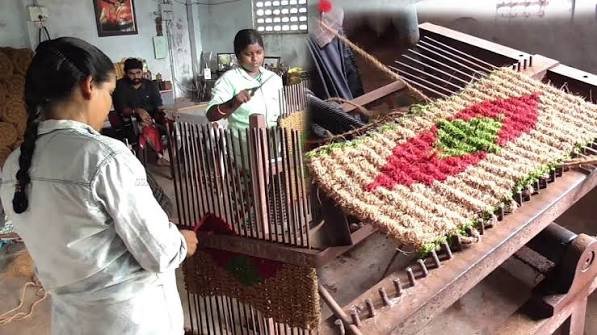
In this deep-dive guide, we will walk you through the entire coir mat manufacturing process, taking you step-by-step from raw coconut husk to coir mat—and showing why Kerala’s handmade natural fibre mats remain unbeaten in quality and sustainability.
Quick Overview of the Coir Mat Manufacturing Process
For a quick summary, here is the complete 8-step sequence of how coir mats are made in Kerala:
- Coconut Selection & Husk Collection: Harvesting mature coconuts and gathering outer husks.
- Retting & Fibre Extraction: Soaking husks in backwaters to soften tissues and defibering them into raw coir.
- Cleaning & Sun-Drying: Beating out pith, combing fibres, and drying them under the tropical sun.
- Spinning Coir Yarn: Twisting raw golden fibres into strong yarn using traditional spinning wheels (Ratt).
- Weaving or Tufting: Weaving yarn on traditional wooden handlooms or tufting bristles into PVC/Latex backing.
- Dyeing & Printing: Applying eco-friendly dyes, stencils, flocking, or personalized door-mat patterns.
- Backing & Vulcanization: Applying natural rubber or PVC backings for non-slip indoor/outdoor durability.
- Trimming, Inspection & Packing: Shearing stray fibers, strict quality checks, and dispatching to homes worldwide.
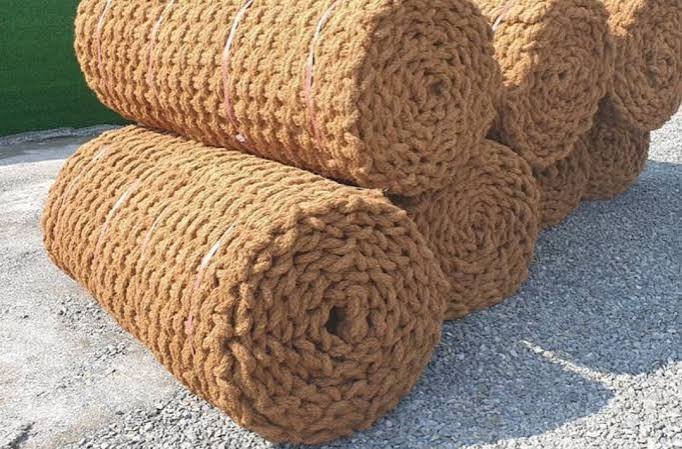
1. Coconut Selection and Husk Collection: The Raw Material
The journey of every natural coir doormat begins in Kerala’s lush coconut groves. India is one of the world’s largest producers of coconuts, and Kerala alone contributes a massive share of the country’s coir production.
The outer fibrous layer surrounding the hard coconut shell is called the epicarp and mesocarp—commonly known as the coconut husk. Rather than letting this agricultural byproduct go to waste, local farmers and husk collectors bundle these husks and transport them to coir processing units across Alappuzha, Kollam, and Kozhikode.
- Green Husks (10–11 months old): Yield long, soft, flexible white fibres—ideal for spinning fine yarns and delicate woven mats.
- Brown Husks (Fully mature coconuts): Yield strong, coarse brown coir fibres packed with lignin—ideal for heavy-duty dirt-scraping entrance doormats.
2. Retting and Fibre Extraction: The Magic of Backwater Soaking
Retting is the heart of traditional Kerala coir mat making. It is a natural biological soaking process that breaks down the organic plant tissues (pectin) holding the tough fibres together inside the husk.
Traditional Backwater Retting (White Coir)
Husks are packed into large woven nets and submerged along the edges of saline backwaters, lagoons, or estuaries for 6 to 10 months. The unique combination of brackish water, tidal movement, and naturally occurring anaerobic bacteria slowly digests the soft cellular tissue without damaging the golden coconut fibres.
Mechanical Decortication (Brown Coir)
To meet high global demand, modern coir mills also use decorticator machines. Husks are soaked in freshwater tanks for 24 to 72 hours, then fed into rotating studded drums that mechanically crush the husks and separate the tough brown fibre from the powdery coir pith (coir dust).
| Feature | Traditional Retting (White Coir) | Mechanical Decortication (Brown Coir) |
| Soaking Time | 6 – 10 Months | 1 – 3 Days |
| Water Type | Brackish backwater streams | Freshwater tanks |
| Fibre Yield | Soft, fine, golden-white yarn | Coarse, resilient, dark brown fibre |
| Best Used For | Hand-woven carpets, fine mats | Tufted entrance doormats, brush mats |
3. Fibre Cleaning, Combing, and Sun-Drying
Once extracted from the husks, the wet fibre is covered in leftover fruit pith and dirt.
- Willowing & Beating: Workers beat the wet fibres manually with wooden sticks or pass them through a mechanical willowing machine to dislodge loose pith particles.
- Hackling (Combing): The fibres are pulled through steel-toothed combs to straighten them out, separating short mattress fibres from long bristle fibres.
- Sun Drying: The cleaned golden fibres are spread out across large open drying yards under the warm Kerala sun. Natural sun-drying gives coir its characteristic golden shine while reducing moisture levels below 15% to prevent mold growth.
4. Understanding Brown Coir vs. White Coir
When exploring the coir mat manufacturing process, it is vital to know the distinction between brown and white coir, as both serve very different functional needs:
- Brown Coir: Extracted from fully ripened coconuts. Contains higher lignin content, making it thick, rigid, highly water-resistant, and abrasive. Perfect for high-traffic entrance doormats designed to scrub mud off footwear.
- White Coir: Extracted from unripe green coconuts after prolonged retting. It is smoother, more flexible, lighter in color, and easier to dye. Perfect for decorative indoor carpets, runner mats, and hand-spun coir ropes.
5. Spinning Raw Fibre into Durable Coir Yarn
After drying, the fluffy loose fibre must be transformed into continuous yarn before it can be woven on looms.
In traditional households across rural Kerala, spinning is done using a two-wheel hand-crank device known locally as a Ratt:
- One artisan feeds raw fibre strands from a pouch around her waist, feeding them evenly into two rotating spindles.
- A second person turns the wheel to impart a strong, uniform twist into the strands.
- The two individual strands are then twisted together in the opposite direction (plying) to form a balanced, high-tensile 2-ply coir yarn (such as Anjengo or Mangadan yarn).
Today, semi-automatic motor-driven spinning machines are also used to keep up with large commercial export demands, but traditional hand-spun yarn remains prized for its unique, rustic charm and strength.
6. Weaving the Doormat: Handloom vs. Machine Tufting
Once the yarn is ready, it undergoes weaving or tufting to take the shape of a doormat. Kerala master weavers utilize two main production methods:
Method A: Traditional Handloom Weaving
In historic centers like Alleppey, skilled craftsmen operate heavy wooden handlooms.
- Creel Mats: Thick brush-like mats created by inserting dense vertical coir yarn tufts into a strong woven base.
- Fibre Mats / Corridor Mats: Flat-woven mats featuring intricate geometric patterns, herringbone weaves, or striped borders.
- Handloom weaving offers exceptional weave density, edge strength, and structural resilience that machine production struggles to duplicate.
Method B: Modern Machine Tufting (PVC / Latex Backed Doormats)
For modern minimalist doormats, cut coir bristles are tufted directly into a molten PVC or liquid natural latex sheet. Specialized machinery embeds thousands of upright coir bristles per square inch onto the backing layer. Once cooled and cured, the sheet is cut into standard doormat sizes (e.g., 45×75 cm or 40×60 cm).
7. Dyeing, Printing, Flocking, and Custom Designing
Natural un-dyed coir has a warm, earthy tan tone. However, to suit modern interior aesthetics, mats undergo creative surface styling:
- Eco-Friendly Dyeing: Coir yarn skeins are submerged in large heated dye vats using AZO-free, non-toxic dyes to achieve rich shades of black, red, green, blue, and terracotta.
- Stencil Screen Printing: Heavy-duty acrylic paints are hand-stenciled or machine-printed onto tufted mats to apply welcoming messages (“Welcome”, “Namaste”), seasonal motifs, or floral patterns.
- Flocking: Synthetic micro-fibres are electrostatically applied to adhesive-coated areas of the mat, creating elevated 3D plush text and velvet-textured designs.
8. Applying Non-Slip Backings: Rubber, PVC, and Natural Latex
Unbacked woven coir mats can slide on smooth tiled or polished wooden floors. To ensure home safety, backings are integrated during manufacturing:
- Natural Latex Backing: Natural rubber sap harvested from Kerala rubber plantations is sprayed or squeegeed onto the underside of woven mats. It locks the yarn knots in place and provides a flexible, biodegradable non-skid grip.
- Moulded Rubber Borders: Coir center inserts are vulcanized directly into heavy, decorative cast-rubber frames—creating stylish rubber-cum-coir combination entrance mats.
- PVC Backing: Liquid PVC compounds are applied to high-traffic mats, making them waterproof, non-fraying, and easy to trim into custom shapes.
9. Trimming, Quality Inspection, and Eco-Packing
The last stage of how coir mats are made ensures every product leaving Kerala meets international export benchmarks:
- Shearing & Trimming: High-speed mechanical shearing blades sweep across the mat surface, cutting away stray fibres to create a smooth, level brush surface.
- Beating & Vacuum Cleaning: Mats are vibrated and vacuumed to eliminate loose surface fluff.
- Quality Inspection: Inspectors check edge alignment, print sharpness, backing adhesion, dimensions, and weight consistency.
- Eco-Friendly Packaging: Approved mats are labeled, bundled with recycled cardboard tags, and packed into compressed bales or corrugated cartons for shipment across India and worldwide.
The Heart of the Industry: Role of Kerala’s Coir Communities
Behind every coir doormat is a thriving social ecosystem. Kerala’s coir industry supports over 400,000 workers, a remarkable 80% of whom are women from coastal rural households.
Organized through primary coir cooperative societies and supported by government bodies like the Coir Board of India (headquartered in Kochi), this industry empowers women artisans with fair wages, sustainable livelihoods, and financial independence. When you purchase an authentic Indian coir mat, you are directly supporting sustainable green jobs and age-old artisan craftsmanship.
Why Choose Kerala Coir Mats over Synthetic Doormats?
- 100% Biodegradable & Eco-Friendly: Unlike plastic or polyester doormats that linger in landfills for centuries, coir naturally decomposes back into Mother Earth.
- Superior Dirt-Scraping Power: The natural stiffness of coconut fibre acts like hundreds of tiny bristles, scraping coarse dirt, mud, and debris right off shoe soles.
- All-Weather Resilience: Coir fibres naturally resist moisture, rot, bacteria, and fungal growth—making them ideal for India’s heavy monsoons and humid coastal climates.
- Carbon Neutral Production: Traditional handloom coir processing relies heavily on solar drying, manual spinning, and renewable plant materials.
Frequently Asked Questions (FAQs)
Q1. How long does a natural coir doormat last?
With basic care, a quality Kerala coir doormat lasts between 1 to 3 years in high-traffic outdoor entrances, and even longer when kept under covered porches or indoor doorways.
Q2. Can coir mats handle rain and wet footwear?
Yes, coir fibres are naturally water-resistant and mould-resistant. However, to extend your mat’s lifespan, avoid letting it stay submerged in standing water. If it gets drenched during heavy rains, hang it vertically in a ventilated area to dry out thoroughly.
Q3. How do I clean a coir doormat?
Cleaning coir mats is effortless! Simply lift the mat and give it a firm shake or beat it gently against an outside wall to dislodge trapped dirt and dry dust. You can also use a vacuum cleaner with a brush attachment. Avoid washing coir mats with heavy soap and water soaking.
Q4. Are coir mats sustainable and eco-friendly?
Absolutely! Coir is a 100% renewable natural resource made from coconut husk—an agricultural byproduct. Coir doormats are fully compostable, plastic-free (when non-PVC backed), and require minimal carbon emissions during traditional manufacturing.
Final Thoughts: Bringing Kerala’s Golden Fibre to Your Doorstep
From a raw, discarded coconut husk lying in a tropical grove to a beautifully hand-finished doormat at your entrance, the coir mat manufacturing process is a testament to sustainable Indian craftsmanship. It seamlessly fuses eco-conscious living with rugged functionality.
See Also
- How This Traditional Factory Still Produces Giant Mats from Coconut – Inside Factory
- Step by Step: How to make a Doormat
- Sourcing from the Source: A Buyer’s Guide to Alappuzha’s Coir Industry
- Coir Doormat Size and Thickness Guide for Indian Doors
- Panipat vs. Karur: A Guide to India’s Largest Home Furnishing Hubs
