

If you run a home décor brand, a commercial interior studio, or a retail store, you already know that floor coverings make or break a space. But when it comes to true luxury underfoot, nothing beats an authentic, hand-woven floor rug.
If you trace the supply chains of high-end rug boutiques in London, New York, Dubai, or Mumbai, you’ll almost certainly end up in one specific town in Uttar Pradesh: Bhadohi, and hear about Bhadohi Hand Knotted Carpets
Known globally as ” कालीन नगरी ” (Carpet City), Bhadohi and its surrounding Varanasi-Mirzapur belt form Asia’s largest hand-knotted carpet weaving hub. It produces over half of all rugs exported from India.
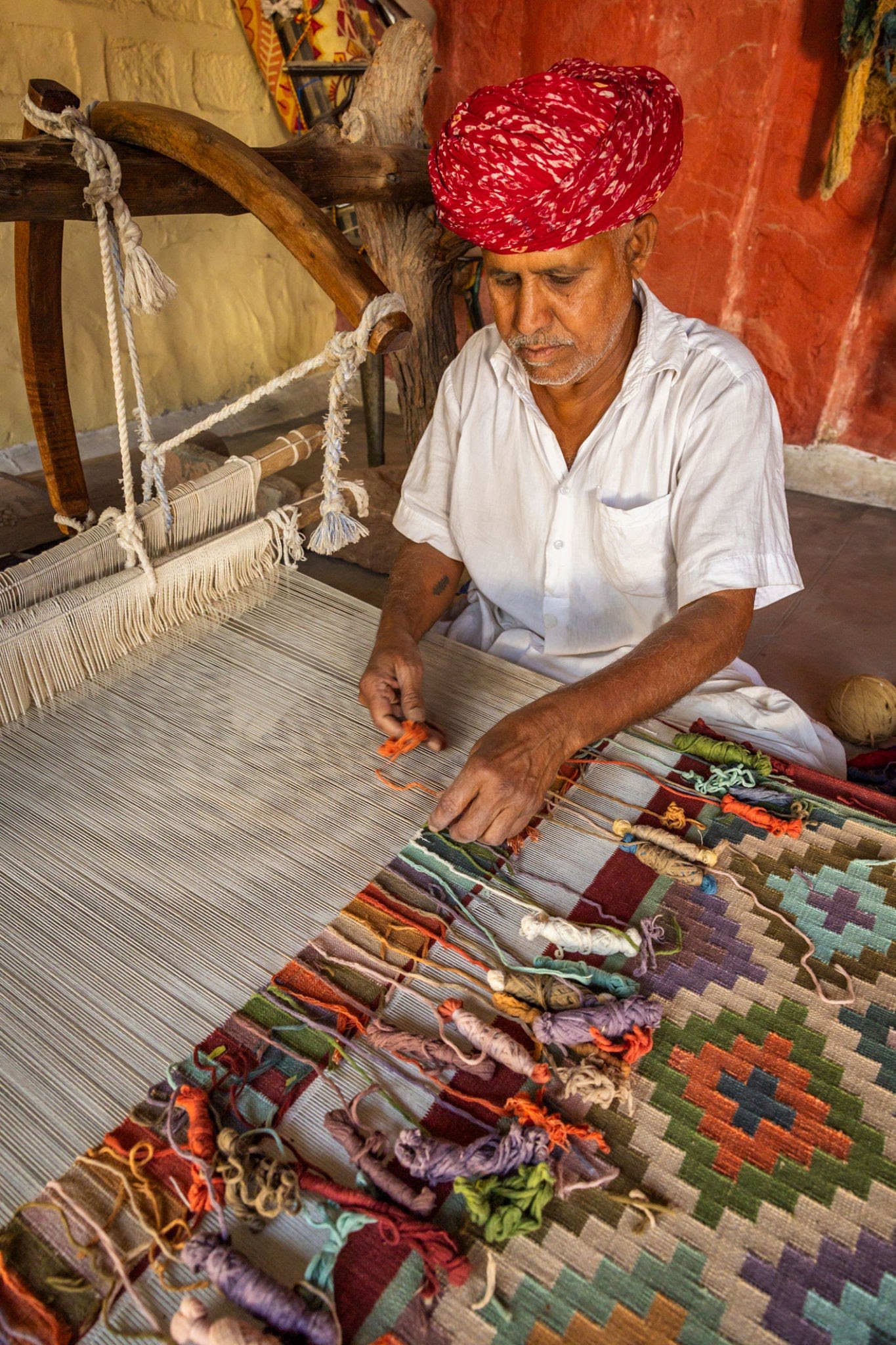
Sourcing directly from carpet manufacturers in Bhadohi gives your business an edge in quality, customization, and margins. However, navigating B2B carpet procurement in Northern India requires an insider’s understanding of weaving techniques, material grading, and quality control.
Whether you are placing your first trial order or expanding your existing import catalog, this guide walks you through everything you need to source Bhadohi hand-knotted carpets with confidence.
What Makes Bhadohi Weaves Globally Unique?
Why do top international buyers bypass mass-production factories and travel directly to Eastern Uttar Pradesh? The secret lies in a balance between generational craft heritage and scale.
1. Generational Heritage & Master Artisan Skill
Carpet weaving in Bhadohi isn’t just an industrial skill—it’s a multi-generational legacy dating back to the 16th century during the reign of Mughal Emperor Akbar. Entire families pass down the delicate technique of hand-tying individual knots on vertical looms.
Master weavers read complex visual patterns called “Talims”—coded color sheets that dictate every single knot tied across weeks or months. This level of human craftsmanship gives Bhadohi hand-knotted carpets a organic texture, subtle color variation, and tactile warmth that mechanical looms cannot replicate.
       [ Warp Threads (Vertical Cotton/Silk) ]
                         │
      ┌──────────────────┴──────────────────┐
      ▼                                     ▼
 [ Asymmetrical Knot ]             [ Symmetrical Knot ]
   (Persian / Senneh)                 (Turkish / Ghiordes)
      │                                     │
      └──────────────────┬──────────────────┘
                         ▼
     [ Weft Thread Packed Down with Heavy Comb ]
2. Deep Customization & Fiber Mastery
Bhadohi’s weaving ecosystem handles every natural and blended fiber imaginable:
- New Zealand Wool: Renowned for high tensile strength, elasticity, and clean dye absorption.
- Indian Bikaner Wool: Stiffer with higher luster, ideal for heavy foot-traffic areas.
- Pure Mulberry Silk & Bamboo Silk: Used for intricate highlights or full-silk heirloom rugs with shimmering luster.
- Sustainable Jute & Natural Blends: Perfect for modern eco-conscious collections.
3. High Knot Density (KPSI) and Structural Durability
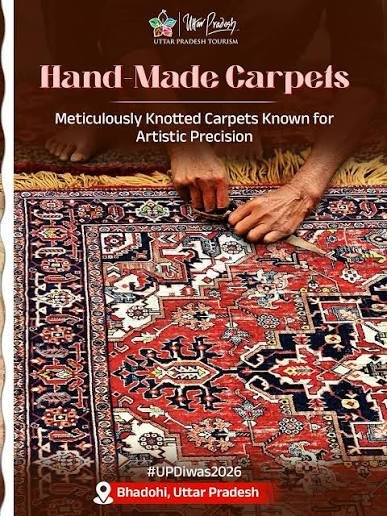
Unlike machine-made carpets, where yarns are looped into synthetic backings, Bhadohi hand-knotted carpets are tied directly onto warp threads.
The benchmark for luxury quality in hand-knotted rugs is measured in Knots Per Square Inch (KPSI). A higher KPSI means tighter detail, richer color transitions, and superior resistance to fiber shedding.
| Grade Level | KPSI Range | Knots / Sq. Meter | Common Usage & Target Market | Typical Production Time |
| Commercial / Essential | 30 – 60 KPSI | ~46,000 – 93,000 | High-traffic hospitality, retail mid-market | 4 – 8 Weeks |
| Premium Residential | 80 – 120 KPSI | ~124,000 – 186,000 | Luxury home décor stores, boutique hotels | 12 – 16 Weeks |
| Heirloom / Fine Silk | 150 – 300+ KPSI | ~232,000 – 465,000+ | High-end luxury residential, art collectors | 20 – 36+ Weeks |
How Global B2B Retailers Can Differentiate Hand-Knotted vs. Hand-Tufted Carpets
For B2B buyers, mislabeling carpet constructions can harm customer trust and lower margins. In the rug trade, two popular handmade options dominate: Hand-Knotted and Hand-Tufted.
While both are made by skilled human hands, their structural integrity, price points, and long-term durability are completely different.
1. Structural Construction
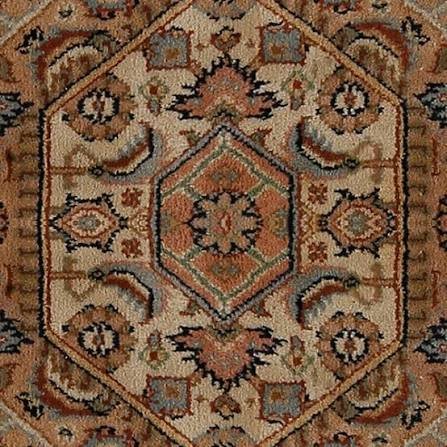
- Hand-Knotted Carpets: Built knot by knot from scratch on a vertical loom. The pile and foundation warp/weft are tied together. There is no glue, rubber, or chemical backing.
- Hand-Tufted Carpets: Built by punch-injecting yarn strands into a pre-woven cloth canvas using a hand-operated tufting gun. To hold the pile in place, a coat of latex glue is painted on the back, followed by a canvas backing cloth.
2. Identifying the Backing (The “Flip Test”)
When evaluating samples from suppliers, always flip the rug over:
- Hand-Knotted: The back is a direct mirror image of the front pattern. You can clearly count individual knot bumps with your fingers. The edge binding (selvage) is part of the original weave.
- Hand-Tufted: The back is completely covered by a flat cotton canvas or mesh cloth held by latex glue. You cannot see the structural weave of the pattern from behind.
3. Lifespan & Sustainability
- Hand-Knotted: Built to last 50 to 100+ years. They can be washed, repaired, and passed down through generations. They are 100% biodegradable when made with wool and cotton.
- Hand-Tufted: Designed for a 3 to 8-year lifespan. Over time, the latex backing degrades into white powder, leading to pile shedding and backing separation.
Quick B2B Comparison Guide
+------------------------+---------------------------------+---------------------------------+
| Metric / Feature       | Bhadohi Hand-Knotted Carpets   | Standard Hand-Tufted Carpets    |
+------------------------+---------------------------------+---------------------------------+
| Primary Construction   | Tied individually on loom knots | Gun-punched yarn into canvas    |
| Latexd Glue / Backing  | Zero (100% Natural Structure)   | Heavy Synthetic/Natural Latex   |
| Back Surface Visual    | Clear mirror design of front    | Hidden by flat cotton canvas    |
| Lifespan Expectancy    | 50 - 100+ Years (Heirloom)     | 3 - 8 Years (Commercial Cycle)  |
| Price & Value Retention| Premium (Increases over time)   | Budget to Mid-Range             |
+------------------------+---------------------------------+---------------------------------+
Logistics: Inspecting Quality Standards and Shipping from Northern Indian Hubs
Sourcing Bhadohi hand-knotted carpets requires clear quality assurance processes and efficient logistics planning. Working with Indian export hubs demands a clear system from initial design sign-off to container loading.
1. Establishing Pre-Production Quality Checks
Before issuing a full purchase order (PO), implement a three-step quality control protocol:
- Talim & Strike-Off Approval: Request a 1×1 foot “strike-off” sample. Check the color matching against Pantone TCX/TPG codes, pile height, and knot density.
- In-Line Loom Inspection: Work with an independent third-party agency (like SGS or Bureau Veritas) or request live video verification from the weaver’s shed. Verify yarn composition, warp tension, and dimensional accuracy.
- Post-Weave Finishing Audit: The quality of a hand-knotted carpet depends on its washing and finishing. Ensure your supplier uses proper eco-friendly chemical washing to stabilize dyes, enhance wool softness, and clip pile edges evenly.
[ Step 1: Design & Strike-Off Approval ]
                   │
                   ▼
[ Step 2: Loom Weaving & In-Line QC Check ]
                   │
                   ▼
[ Step 3: Washing, Clipping & Sun Drying ]
                   │
                   ▼
[ Step 4: Final B2B Quality & Size Audit ]
                   │
                   ▼
[ Step 5: Moisture-Proof Export Packing ]
                   │
                   ▼
[ Step 6: Inland Transport to Freight Hub ]
2. Export Compliance and Ethical Certifications
Modern retail consumers demand ethical supply chains. Ensure your Bhadohi sourcing partners hold recognized trade certifications:
- CEPC (Carpet Export Promotion Council): Ensures authenticity, legal export status, and standardized Indian trade compliance.
- GoodWeave or STEP Certification: Verifies that no child or forced labor was used anywhere in the weaving process.
- ISO 9001 & Oeko-Tex Standard 100: Validates quality management and confirms yarns are free from harmful chemical dyes.
3. Freight Logistics & Packaging
Bhadohi is connected to Northern India’s main export corridors:
- Inland Container Depots (ICD): Finished carpets are inspected, packed, and loaded at ICD Kanpur, ICD Dadri, or ICD Varanasi.
- Seaport Gateways: Cargo moves via dedicated rail and road corridors to Jawaharlal Nehru Port Trust (JNPT / Nhava Sheva, Mumbai) or Mundra Port (Gujarat) for oceanic ocean freight. Air freight dispatches go through Indira Gandhi International Airport (DEL), New Delhi.
- Moisture & Baling Protection: Hand-knotted wool rugs absorb environmental moisture during sea transit. Require suppliers to pack rugs rolled face-out in heavy-duty polyethylene sleeves, wrapped in waterproof burlap/HDP hessian cloth, and reinforced with steel strapping.
B2B Sourcing Checklist for Bhadohi Rugs
Before finalizing your purchase contracts with Bhadohi manufacturers, use this quick checklist to ensure seamless execution:
Important Procurement Tip: Always specify exact carpet dimensions in centimeters rather than feet in your B2B contracts. Handmade floor coverings carry a standard industry tolerance of +/- 2% due to natural yarn shrinkage during washing.
The Essential Sourcing Checklist:
- [ ] Fiber Specification: Is the pile wool 100% New Zealand, Bikaner, or a blended ratio?
- [ ] KPSI Verification: Has the supplier specified exact vertical warps and horizontal wefts per inch?
- [ ] Color Fastness Test: Have yarns been tested against lightfastness and wet/dry rubbing?
- [ ] Ethical Audit: Is the manufacturer certified by GoodWeave or CEPC?
- [ ] Drying Method: Are carpets sun-dried naturally or kiln-dried under regulated humidity?
- [ ] Moisture-Barrier Packing: Are rugs packed with silica gel desiccants inside waterproof outer wraps?
- [ ] Incoterms Agreement: Have you settled on FOB (Nhava Sheva/Mundra) vs. CIF destination port terms?
Final Thoughts: Building a Reliable Bhadohi Supply Chain
Sourcing Bhadohi hand-knotted carpets gives your catalog authentic craft heritage, durability, and strong commercial value. By understanding knot densities, verifying construction methods, and enforcing thorough quality checks, you can establish a smooth supply chain from Uttar Pradesh directly to your retail distribution centers.
As global demand shifts toward sustainable, long-lasting interior products, partnering with Bhadohi’s master artisans helps protect a centuries-old Indian craft while delivering quality floor coverings to your customers.
See Also
Bhadohi Carpet Market: Premium Quality Handmade Rugs | Latest Designs & Best Price in India
Hand-knotted Rug weaving | India carpet Manufacturing | Handmade Carpet Bhadohi
Polypropylene vs. Natural Coir Doormats: Which Gatekeeper Wins?
Panipat vs. Karur: A Guide to India’s Largest Home Furnishing Hubs

[…] Sourcing from the Source: A Buyer’s Guide to Bhadohi’s Carpet Industry […]