

Have you ever shopped for bedding and wondered whether you need a bed cover, a bedsheet or a bedspread? You’re not alone! These terms are often used interchangeably in India, even though each product has a different purpose.
Some bedding keeps your mattress clean, some protects your bed when it isn’t in use, and some adds a decorative finishing touch to your bedroom. Knowing the difference can help you choose the right fabric, avoid unnecessary purchases and create a comfortable bed that looks good every day.
In this guide, we’ll explain the difference between a bed cover, bedsheet and bedspread, compare their uses and fabrics, and help you decide which option works best for your home.
Bed Cover vs Bedsheet vs Bedspread: What’s the Difference?
A bedsheet is a layer of fabric placed directly over the mattress or used as a sleeping layer, depending on the type. A bed cover is a protective or decorative covering placed over the bed, usually when it isn’t being used. A bedspread is a larger decorative bed covering designed to cover the top of the bed and often extend over the sides.
Although their functions can overlap, the main difference lies in how each item is used, how it is constructed and where it sits in your bedding arrangement.
| Feature | Bedsheet | Bed Cover | Bedspread |
|---|---|---|---|
| Main purpose | Comfort and mattress protection | Protecting or decorating the bed | Decorative coverage and a finished look |
| Typical fabric | Cotton, cotton blends, linen | Cotton, polyester, blends and quilted fabrics | Cotton, jacquard, woven fabrics and blends |
| Construction | Usually a single fabric layer | Single-layer, quilted or padded, depending on design | Often a lightweight, decorative fabric layer |
| Placement | Directly on the mattress or over the sleeper | Over the made bed | Over the bed, often extending down the sides |
| Typical use | Everyday sleeping | Daytime protection and styling | Decorative layering and guest-room presentation |
| Washing needs | Usually frequent | Depends on use and construction | Depends on fabric, size and care label |
Quick tip: If you want something to sleep on, start with a bedsheet. If you want to cover your made bed during the day, consider a bed cover or bedspread, depending on the look and coverage you prefer.
1. What Is a Bedsheet?
A bedsheet is one of the most essential items in your bedroom. It creates a comfortable surface for sleeping, helps keep the mattress clean and can make changing your bedroom’s appearance as simple as changing the colour or print.
Bedsheets are available in different fabrics, sizes, weaves and finishes. For Indian households, cotton bedsheets are a popular option because they are breathable, comfortable and available in a wide range of designs.
Types of bedsheets
Flat bedsheets: These are rectangular sheets that lie over the mattress. They can also be used as a top sheet or as a light covering, depending on personal preference.
Fitted bedsheets: These have elasticated corners or edges designed to grip the mattress. They are particularly useful if you dislike a bedsheet bunching up while you sleep.
Cotton bedsheets: Cotton is a versatile choice for everyday bedding. Its comfort depends on factors such as fibre quality, weave, yarn and finishing.
Printed and decorative bedsheets: Floral prints, geometric designs, traditional Indian motifs and hand-block prints can bring colour and personality to your bedroom.
Which bedsheet fabric is best for Indian weather?
For warm and humid conditions, breathable fabrics are often a sensible starting point. Cotton percale, for example, generally has a crisp, matte feel, while sateen tends to feel smoother and can have a subtle sheen.
Linen is another option for those who enjoy its distinctive texture, although it wrinkles more readily. Blended fabrics may offer easier maintenance, depending on their composition.
Remember that no fabric is automatically best for everyone. Your comfort, budget, washing routine and personal preference all matter.
How often should you wash a bedsheet?
Bedsheets are in direct contact with your skin for hours at a time, so they generally need more frequent washing than decorative bed coverings. A practical routine for many households is to wash them about once a week, adjusting for hot weather, sweating, allergies, illness or other individual needs.
Always follow the care label, particularly for printed, embroidered or delicate fabrics.
2. What Is a Bed Cover?
A bed cover is a fabric covering placed over a made bed to protect it from everyday dust, incidental contact and general household use. It also helps the bedroom look tidy, especially when the bed is not being used.
The term can mean different things depending on the seller. Some bed covers are thin, single-layer decorative fabrics; others are quilted or lightly padded. This is why checking the product description is important when shopping online.
What are bed covers used for?
Bed covers are useful for several reasons:
- Daytime protection: They provide an additional layer between the bedsheet and everyday dust or contact.
- A tidier bedroom: A neatly arranged bed cover can make the room look organised in seconds.
- Decorative styling: Colours, textures and patterns can complement your curtains, cushions and other furnishings.
- Seasonal updates: Changing the bed cover is an easy way to refresh your bedroom without replacing the entire bedding set.
A bed cover is not a substitute for regular cleaning, and it does not necessarily provide waterproof or dust-mite protection unless it is specifically designed and labelled for that purpose.
Which bed cover fabric should you choose?
Cotton bed covers are a good option if you prefer a natural-feeling fabric that is relatively easy to maintain. Polyester and blended fabrics can be practical where crease resistance or quick drying is a priority. Quilted bed covers provide a more textured appearance and may offer some additional padding.
When buying a double bed cover, pay attention to its actual dimensions rather than relying only on the label. A product marked “double” may not fit every double bed in the same way.
Also check whether the product includes a matching pair of pillow covers, whether the reverse side has a different design and whether the cover is machine washable.
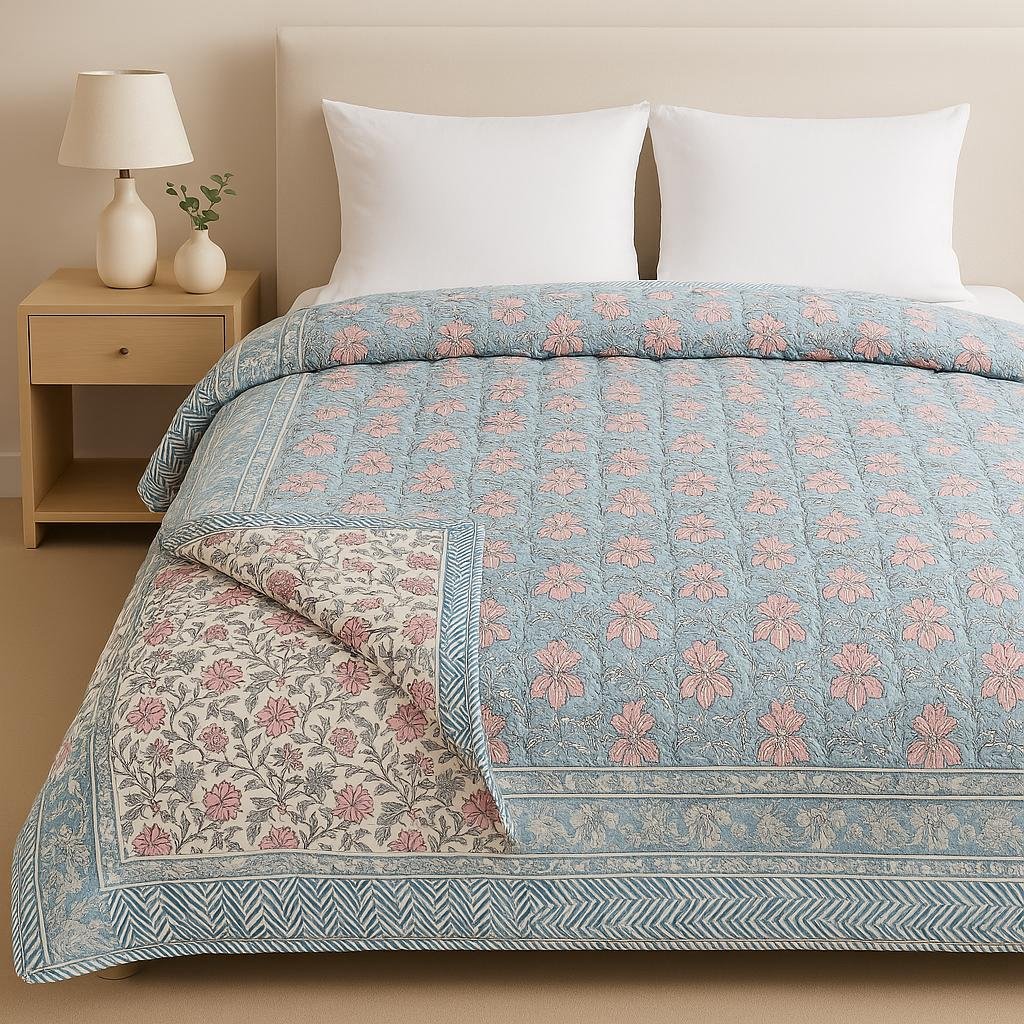
3. What Is a Bedspread?
A bedspread is a decorative covering designed to create a coordinated, finished appearance across the bed. It usually covers the top of the bed and extends down the sides, although the amount of coverage depends on its dimensions and design.
Unlike a fitted bedsheet, a bedspread is generally not intended to grip the mattress. It is placed over the bed after the sleeping layers have been arranged.
Bedspreads are available in woven cotton, jacquard, printed fabrics, lightweight textured materials and other constructions. Some are thin and decorative, while others have a slightly heavier feel.
When should you use a bedspread?
A bedspread can be particularly useful when:
- You want your bedroom to look neatly styled without complicated layering.
- You are preparing a guest room for visitors.
- You prefer a coordinated look across the bed and pillows.
- You want a decorative covering that extends over the sides of the mattress.
Bedspreads are often a good choice for Indian homes where bedrooms serve several purposes throughout the day. They can help the room look presentable when the bed is not in use.
However, a bedspread is not necessarily warm enough to replace a blanket or quilt. Its warmth depends on the fabric, thickness and construction.
Is a bedspread different from a quilt?
Yes, although the products can look similar.
A bedspread is primarily intended to cover and decorate the bed. A quilt generally has layers stitched together, often including a filling between the outer fabrics, to provide insulation or additional comfort.
Some bedspreads are quilted, so the terms can overlap in retail listings. If warmth is important, check whether the product has a filling and whether the manufacturer describes it as suitable for sleeping.
4. Bed Cover vs Bedsheet vs Bedspread: Which Should You Choose?
Now that you know what each product does, the choice becomes much simpler. Think about how you want to use the item rather than focusing only on its name.
| Your requirement | Best starting point | Why |
|---|---|---|
| A comfortable surface for sleeping | Bedsheet | Designed for use against the mattress or body |
| Keeping the bed looking tidy during the day | Bed cover | Offers convenient everyday coverage |
| A decorative finish with more side coverage | Bedspread | Often designed to drape over the bed |
| Easy-to-change everyday bedding | Cotton bedsheet | Widely available and often easy to wash |
| Styling a guest bedroom | Bedspread or bed cover | Helps create a coordinated appearance |
| A layered, hotel-inspired look | Bedsheet plus bedspread | Combines a practical sleeping layer with decorative coverage |
You do not need to buy all three products. For everyday use, a bedsheet and a suitable blanket or quilt may be enough. Add a bed cover or bedspread if you want extra daytime protection or a more decorative finish.
Which option is best for everyday use?
For most households, a comfortable bedsheet is the essential starting point because it is used regularly and needs frequent washing.
A bed cover is helpful if you want to protect the made bed during the day, particularly in a busy household. A bedspread is useful if you prefer a decorative layer that gives the bed a more finished appearance.
The best arrangement depends on your routine, climate, available storage and how much laundry you want to manage.
5. How to Choose the Right Bedding for Indian Homes
Choosing bedding involves more than picking an attractive print. The right combination should suit your room, mattress, local weather and washing habits.
Consider the climate
For hot and humid weather: Start with breathable bedsheet fabrics, such as cotton, and consider how quickly they dry in your home’s conditions. Lightweight bed covers and bedspreads may be easier to manage than heavily layered bedding.
For cooler weather: You can add blankets, quilts or comforters according to the warmth you need. A decorative bedspread may sit over these layers, but it should not be assumed to provide substantial insulation on its own.
During the monsoon: Dry bedding thoroughly before storing it. Damp fabric kept in a cupboard can develop an unpleasant smell or mould. Allow air to circulate around your bedding and avoid putting away items that still feel moist.
Think about washing and maintenance
Bedsheets generally require more frequent washing because they come into direct contact with the sleeper. Decorative bed covers and bedspreads may be washed less often, depending on their use, but they still need regular care.
Before buying, check:
- Whether the fabric is machine washable.
- Whether the item may shrink after washing.
- Whether the colours are likely to bleed.
- Whether the product needs gentle washing or professional cleaning.
- Whether you have enough space to dry a large bedspread properly.
If you prefer a low-maintenance household routine, a simple cotton or suitable blended fabric may be more practical than an elaborate covering with delicate embroidery.
Measure your mattress before buying
One of the most common bedding-shopping mistakes is buying by bed size alone.
Measure the mattress’s length, width and depth. For a fitted bedsheet, check the pocket depth as well as the mattress dimensions. For a flat bedsheet, allow extra fabric for tucking in.
For bed covers and bedspreads, consider how far you want the fabric to fall over each side of the mattress. A larger mattress or a taller bed may need a wider covering to achieve the same appearance.
If you are buying online, compare the product’s stated dimensions with your measurements. Do not assume that every single, double, queen or king-size label follows the same dimensions across brands.
Match the bedding to your bedroom
A neutral bedspread can create a calm, understated look, while a colourful Indian block-print bedsheet can become the focal point of the room. Textured bed covers can add interest without introducing too many competing patterns.
If your curtains and cushions already have bold prints, a simpler bed covering may create a more balanced appearance. If the room is mostly neutral, patterned bedding can add warmth and character.
The idea is not to make every fabric match exactly. Choose colours and textures that work together while keeping comfort and maintenance in mind.
6. Frequently Asked Questions
Can a bedspread replace a bedsheet?
Not usually. A bedsheet is designed to provide a comfortable sleeping surface and is generally washed more frequently. A bedspread is mainly used as a decorative covering. You can choose to sleep directly under a bedspread if its fabric and construction are comfortable, but it is not automatically a replacement for a bedsheet.
Is a bed cover the same as a comforter?
No. A bed cover is usually a protective or decorative layer, while a comforter is a filled bedding item designed to provide warmth. Some bed covers are quilted or padded, so check the product description to understand its construction and intended use.
Can I use a bed cover without a bedsheet?
You can place a bed cover over a mattress, but it is generally better to use a suitable bedsheet as the main sleeping layer. The bedsheet can be removed and washed more regularly, helping you maintain a practical bedding routine.
What is the difference between a bed cover and a bedspread?
The terms often overlap in Indian retail listings. Generally, a bed cover is described as a protective or decorative covering, while a bedspread is designed to create a decorative finish and may extend further over the sides of the bed. Always check the dimensions, fabric and product description.
Which is better for summer: a bedsheet or a bedspread?
They serve different purposes, so it is not an either-or choice. A lightweight, breathable bedsheet is a practical starting point for sleeping in summer. A bedspread can be added during the day for appearance or used as a light covering if its fabric and weight suit you.
How many bedsheets should a household have?
There is no fixed number. Having at least two sets per regularly used bed is a practical starting point: one in use and one available while the other is being washed. You may want additional sets if laundry takes longer to dry during the monsoon or if you prefer changing bedding more frequently.
What size bed cover should I buy for a double bed?
Measure the mattress first, then decide how much fabric you want hanging over the sides. Compare those measurements with the product dimensions, including the length and width. If the bed has a tall mattress or a bulky frame, a standard double-size label may not provide enough coverage.
Final Thoughts
Understanding the difference between a bed cover, bedsheet and bedspread makes choosing bedding much easier.
A bedsheet is your everyday sleeping layer. A bed cover provides practical daytime coverage and can help keep the bed looking neat. A bedspread adds a decorative finish and often offers more coverage over the sides.
For most Indian homes, the best choice depends on comfort, weather, washing routines and mattress size. Start with a good bedsheet, then add a bed cover or bedspread if it suits your needs and personal style.
The right bedding is not necessarily the most expensive or elaborate. It is the combination that feels comfortable, works with your daily routine and helps your bedroom feel like home.
See Also
- Bedspread vs Bed Sheet | Which One Suits Your Style?
- What is the Difference Between a Bedsheet and a Bed Cover?
- Cotton Bedsheet Thread Count India: The Ultimate Buyer’s Guide for Indian Weather
- Bedsheet Size Chart India: Single, Double, Queen and King Sizes
- How to Wash Hand Block Printed Bedsheets Without Fading: The Ultimate Care Guide
- Sourcing Jaipuri Cotton: A Buyer’s Guide to Authentic Block-Printed Textiles
