
In the world of home furnishings and boutique hospitality, few textiles carry the universal appeal, cultural weight, and artistic prestige of Rajasthani hand block prints. From high-end interior design studios in London and New York to luxury resort chains in Bali and Goa, Indian hand-stamped bedding has transitioned from a niche artisanal craft into a mainstream globally demanded luxury item.
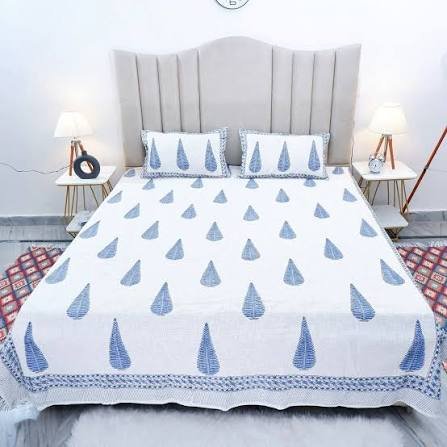
When international retail buyers, hotel sourcing managers, and boutique owners search for premium cotton bedding, Jaipuri prints consistently rank at the top of their procurement lists. The soft hand-feel of pure Rajasthani cotton, combined with centuries-old botanical and geometric motifs, gives every bed sheet, duvet cover, and throw blanket a unique storytelling narrative.
However, as wholesale demand skyrockets, the market has become flooded with cheap imitations. High-speed rotary machines, digital screen printers, and chemical pigment coatings frequently disguise themselves as traditional handloom items.
If you are a commercial buyer, interior stylist, or retail merchandiser looking to stock your inventory with genuine craft, this comprehensive guide will equip you with the technical knowledge needed when sourcing authentic jaipur block print bed linen for your store or commercial project.
The Global Demand for Jaipur’s Hand-Block Printed Sheets and Covers
The pink city of Jaipur and its surrounding craft villages have been the heartland of Indian textile printing since the 17th century. What makes Jaipuri bed linen so highly sought-after in international home fashion markets?
- Breathability and Climate Suitability: Traditional Jaipuri bed sheets are printed on fine, lightweight cotton (such as cotton cambric, percale, and mulmul). These breathable natural weaves allow maximum air circulation, making them ideal for warm, tropical, and temperate climates.
- Artisanal Character: No two hand block printed sheets are identical. The subtle human variations in stamp pressure and alignment give each piece an organic, human character that mass-produced fast-fashion home decor cannot replicate.
- Eco-Friendly Sourcing: Modern eco-conscious consumers actively seek sustainable home textiles. Authentic Jaipur block printing relies on biodegradable dyes, wooden blocks hand-carved by local master craftsmen (carvers), and natural sun-drying processes.
- Cultural Storytelling: Beyond utility, consumers buy a piece of Indian heritage. The intricate butis (small floral motifs), jaals (floral lattices), and geometric borders tell centuries-old stories of courtly royal patronage and rural artisan guilds.
Sanganeri vs. Bagru Block Printing: Spotting the Difference
When you start sourcing authentic jaipur block print bed linen from local export houses and manufacturer guilds in Rajasthan, you will immediately encounter two distinct traditional sub-styles: Sanganeri and Bagru.
While both towns sit within 30 kilometers of Jaipur, their techniques, color palettes, visual aesthetics, and printing methods are fundamentally different. Understanding these distinctions is vital for curating the right collection for your brand’s aesthetic.
| Aesthetic & Technical Aspect | Sanganeri Block Print | Bagru Block Print |
| Origin & Cultural Roots | Sanganer town (16 km south of Jaipur); courtly, refined Mughal patronage | Bagru village (30 km west of Jaipur); rural, indigenous village heritage |
| Base Fabric Background | Bright white, off-white, cream, or soft pastel bases | Earthy beige, unbleached grey, cream, or dark indigo bases |
| Design Aesthetics | Fine, delicate, multi-colored floral butis, detailed jaals, and graceful botanicals | Bold geometric shapes, diamonds, thick borders, and stylized tribal/rustic motifs |
| Color Palette | Vibrant jewel tones (reds, blues, greens, pinks, yellows) using direct dye printing | Deep, grounded, natural earth tones (indigo blue, madder red, iron black, ochre) |
| Core Printing Process | Direct hand-stamping on pale fabric using non-toxic AZO-free dyes | Dabu (mud-resist paste made of clay, lime, gum, and chaff) followed by vat dyeing |
| Ideal Retail Product Use | Crisp summer bedsheets, light duvet covers, airy hotel quilts (razais) | Statement bedspreads, winter throws, bohemian bedroom collections |
Sanganeri Prints: Crisp, Floral, and Bright
Sanganeri printing is the most widely recognized Indian block print style in international markets. Artisans use hand-carved wooden blocks made from seasoned teak or rosewood (shisham) to apply direct color directly onto pre-bleached, bright white cotton cloth.
The lines in Sanganeri blocks are incredibly fine—often under 1mm in width. The result is a clean, graceful, and airy bed sheet that brightens up minimalist, modern, or traditional bedrooms.
Bagru Prints: Earthy, Rustic, and Resist-Dyed
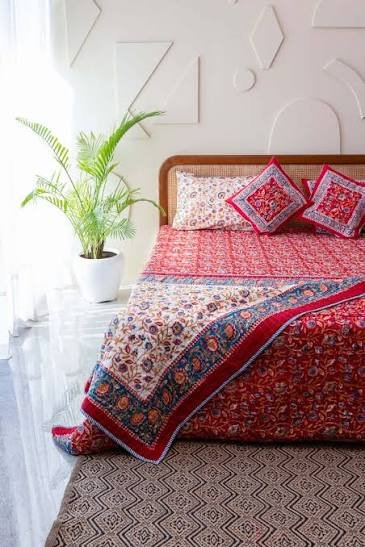
Bagru printing is defined by its ancient Dabu mud-resist technique. Artisans press a thick paste made of black mud, tree gum, lime, and wheat chaff onto the cotton fabric using carved wooden blocks. The cloth is then dipped into deep indigo, madder root, or iron dye vats.
The areas covered by the mud-paste resist the dye, revealing striking light patterns against a dark, earthy background once washed. Bagru bed linens possess a rich, organic, and rustic vibe that appeals to eco-focused and bohemian home decor stores.
How to Verify Authentic Hand-Stamp Craftsmanship vs. Mass-Produced Rotatory Machine Prints
As a wholesale buyer, receiving screen-printed or rotary machine-printed bedsheets when you paid for genuine hand-stamped craft can destroy your brand’s reputation. Machine prints use chemical pigments forced through industrial rollers to print thousands of meters per hour. Genuine hand-block printing, by contrast, relies entirely on the artisan’s eye and manual palm pressure.
Here is a 5-step technical checklist to verify authenticity before approving supplier samples:
1. The “Imperfection” Pattern Test (Micro-Variations)
Examine the pattern repeat across the full length of a 90×108 inch king-size bedsheet.
- Hand Block Print: You will notice minute variations in line thickness, tiny gaps, or slight misalignments where one block impression meets the next. No human hand can strike a wooden block thousands of times at exact 90-degree angles. These subtle variations are proof of authentic handwork.
- Rotary / Screen Print: The pattern repeat is mathematically identical across hundreds of meters, with zero variance in line width or spacing.
2. The Fabric Flip Test (Reverse Side Penetration)
Turn the bedsheet over and examine the back side of the cotton weave.
- Hand Block Print: Because the artisan presses liquid dye deep into the natural cotton fibers with a firm blow of their palm, the pattern bleeds through to the reverse side. The back will show a softer, slightly faded mirror image of the print.
- Machine / Pigment Print: Machine inks sit on top of the fabric surface. The back side remains stark white or plain, showing almost no pattern penetration.
3. Edge Pressure Gradation
Look at individual motifs under a loupe or magnifying glass.
- Hand Block Print: In a genuine hand stamp, dye density is slightly heavier at the center of the impression and softly lighter along the outer carved edges where block pressure tapers off.
- Machine Print: Dye density is completely flat, uniform, and sharp from edge to edge without depth or pressure variation.
4. Color Registration Overlaps
Multi-colored Jaipuri prints require multiple carved blocks—one block for the main outline (rekh), and separate secondary blocks for background colors (gadh and datta).
- Hand Block Print: Look closely at where two colors meet. You will occasionally spot tiny 1–2 mm color overlaps or gaps between the outline and the filler shade.
- Digital / Screen Print: Colors line up with sharp, computer-generated alignment.
5. The Tactile and Olfactory Test
Touch and smell the bed linen sample upon opening the package.
- Hand Block Print: Genuine organic cotton hand prints feel soft, flexible, and completely breathable because the dye bonds inside the fibers. Authentic natural-dyed items (especially Bagru) carry a subtle, pleasant earthy scent of indigo, pomegranate rind, or river clay.
- Machine Pigment Print: The printed areas feel slightly stiff, waxy, or plastic-like due to binder chemicals sitting on the surface. They often carry a faint, harsh chemical odor.
Sourcing Checklist for Boutique Store Owners & B2B Buyers
To ensure commercial viability, long-term durability, and customer satisfaction, buyers must evaluate technical textile specifications beyond visual patterns when sourcing authentic jaipur block print bed linen.
1. Base Fabric Selection & Thread Count Metrics
Thread count (TC) measures the number of vertical and horizontal threads per square inch of fabric. High thread count does not automatically mean better quality if the yarn quality is poor. For block-printed bed linens, breathability and dye absorption matter most:
- Cotton Cambric (60s x 60s Yarn / 200–300 TC): The absolute gold standard for block-printed bed sheets. It offers a tight, smooth weave that holds fine block details sharply while remaining crisp, durable, and soft after multiple washes.
- Cotton Percale (40s x 40s Yarn / 180–220 TC): Highly durable, cool to the touch, and perfect for boutique hotel bedding that undergoes frequent commercial laundering.
- Mulmul / Cotton Voile (80s x 80s Yarn / Lightweight): Ultra-soft and sheer, ideal for summer quilts (razais), AC blankets, and lightweight throw sheets.
Buyer Tip: Avoid synthetic polyester blends (Microfiber or Poly-Cotton). Block dyes do not bond properly with synthetic fibers, leading to dull colors, poor breathability, and rapid pilling.
2. Colorfastness & Laboratory Wash Testing
Traditional hand block prints—particularly those made with vegetable dyes—require proper washing procedures. When negotiating with Jaipur suppliers, request lab-certified test reports for:
- Colorfastness to Washing (ISO 105-C06): Ensure a fastness rating of Grade 3.5 to 4 or higher so colors do not run onto white pillow covers during regular wash cycles.
- Colorfastness to Rubbing/Crocking (ISO 105-X12): Verifies that pigment will not rub off onto sleepwear or skin (Dry Rubbing: Grade 4+, Wet Rubbing: Grade 3+).
- AZO-Free Dye Certification: For export to European (REACH) and US markets, ensure all synthetic or direct dyes are certified free from harmful heavy metals and aromatic amines.
3. Pre-Shrinkage & Sanforization
Pure cotton naturally shrinks when exposed to water and heat.
- Always specify Pre-washed or Sanforized fabric in your purchase orders (POs).
- Unwashed cotton bedsheets can shrink by up to 5–8% after the first home wash, causing a 90×108 inch king sheet to pull off mattresses. Ensure your vendor accounts for seam allowances and pre-shrinkage in production dimensions.
4. Ethical Supplier Audits & Fair Trade Compliance
Modern consumers care deeply about the human stories behind their home goods. Partnering with ethical suppliers enhances your brand value:
- Artisan Welfare: Verify that your supplier works directly with registered artisan clusters (Chippa communities) in Sanganer, Bagru, Kaladera, or Jahota, ensuring fair living wages and safe working environments.
- Water Treatment & Effluent Plants (ETP): Textile dyeing generates wastewater. Choose suppliers operating state-of-the-art Effluent Treatment Plants (ETPs) to ensure wastewater is neutralized before discharge into local river basins.
Technical Comparison Matrix for Commercial Buyers
| Parameter | Premium Wholesale Grade | Mid-Tier Market Grade | Lower Commercial Grade |
| Base Fabric | 100% Pure Cotton Cambric (60s) | 100% Carded Cotton (40s) | Poly-Cotton Blend / Microfiber |
| Craft Technique | Hand Block (Teak/Rosewood Blocks) | Flat Screen Print | High-Speed Rotary / Digital |
| Dye Standards | Natural Veg Dyes / AZO-Free Reactive | Standard Pigment Dyes | Chemical Pigment / Heavy Metals |
| Shrinkage Control | Pre-shrunk / Sanforized (<2%) | Semi-washed (3-5%) | Non-shrunk (>8% risk) |
| Colorfastness | High (Lab Tested Grade 4+) | Medium (Requires cold wash) | Poor (Prone to bleeding/fading) |
How to Maintain and Care for Authentic Block-Printed Bed Linen
Including clear care instructions with your retail bedsheet packaging protects your brand from customer returns and extends product life. Educate your end-consumers with these simple care guidelines:
- First Wash Treatment: Wash bed linens separately in cold water with a pinch of common salt. Salt sets natural dyes into pure cotton fibers during the initial wash cycle.
- Mild Liquid Detergents: Use gentle, eco-friendly liquid soaps free from harsh bleaching agents, optical brighteners, or stain removers.
- Gentle Machine Cycle: Wash on a delicate cycle in cold water (< 30°C). Avoid vigorous spinning or heavy-duty cycles.
- Shade Drying: Always air-dry block-printed textiles inside-out in shaded areas. Direct, prolonged harsh sunlight degrades natural plant pigments and fades bright dyes over time.
- Ironing: Iron on the reverse side while the cotton is slightly damp using a warm cotton setting to restore smooth, crisp texture.
Final Thoughts: Building a Responsible Sourcing Strategy
Successfully sourcing authentic jaipur block print bed linen comes down to balancing traditional artisanal integrity with modern commercial quality standards. By visiting artisan centers, requesting lab testing for dye fastness, specifying premium 60s cotton cambric, and verifying hand-stamped imperfections, boutique owners and wholesale buyers can build profitable, culturally rich product lines.
When you offer authentic Jaipuri cotton bedding to your clients, you aren’t just selling home decor—you are delivering a piece of living history, supporting generational artisan communities, and bringing time-tested natural comfort to bedrooms around the world.
Frequently Asked Questions (FAQs)
1. Why is authentic Jaipur hand block print bed linen more expensive than machine-printed bedsheets?
Hand block printing is a labor-intensive, time-consuming manual craft. A single king-size bedsheet requires over 2,000 individual, hand-placed block stamps by skilled master artisans, followed by multiple washing, dyeing, and sun-drying stages. Machine-printed sheets, by contrast, are mass-produced on industrial rollers at hundreds of meters per minute with minimal human intervention.
2. Do authentic hand block printed bedsheets lose color or bleed during washing?
Hand block prints made with natural dyes (like indigo or madder root) may release a small amount of unbonded excess surface dye during their first 1-2 washes. However, high-quality, pre-washed commercial linens using AZO-free reactive dyes remain colorfast when washed in cold water with mild detergents.
3. What is the standard export size for Jaipur block-printed king-size bed sheets?
Standard international export dimensions for king-size bedsheets are typically 108 x 108 inches (274 x 274 cm) or 90 x 108 inches (228 x 274 cm), accompanied by standard matching pillow covers measuring 18 x 28 inches (45 x 70 cm).
4. How can B2B buyers order custom designs and patterns from Jaipur manufacturers?
Most established block-printing export houses in Sanganer and Bagru accept custom orders. Buyers provide vector CAD designs, from which master carvers manually etch custom wooden blocks. Minimum Order Quantities (MOQs) for custom hand block designs usually range between 50 to 100 bedsheet sets per pattern.
Related Sourcing Guides & Articles
- Ultimate Guide to Indian Coir Mats & Sustainable Entrance Rugs
- Export Quality Standards: Cotton Fabric Testing for Retail Buyers
- Eco-Friendly Packaging Ideas for Home Textile Brands
To see a master artisan in action and learn more about traditional Rajasthani textile techniques, check out this video on Hand Block Printing Techniques in Jaipur which visually demonstrates the intricate stamping process and pattern alignment discussed in this guide.
See Also
Sourcing from the Source: A Buyer’s Guide to Bhadohi’s Carpet Industry
Panipat vs. Karur: A Guide to India’s Largest Home Furnishing Hubs
Bedsheet Size Chart India: Single, Double, Queen and King Sizes