

Picture this: You have beautifully decorated your home entrance, perhaps added a couple of terracotta planters, and placed a sturdy, classic coir doormat right at the doorstep to welcome your family and friends. It looks picture-perfect. But fast forward a few months, and you notice the edges or corners of that robust welcome mat have started to curl upward like a dried papad. So, how to flatten a curled coir doormat safely
Suddenly, your aesthetically pleasing entrance tracker transforms into a dangerous tripping hazard. Every time the Amazon delivery agent, your friendly neighborhood aunty, or you yourself rush inside carrying heavy grocery bags, someone catches their toe on that stubborn, upturned lip.
It is an incredibly annoying household problem, but you don’t need to throw your natural coconut fiber mat into the trash just yet. If you are struggling with a distorted entryway mat, this troubleshooting guide will walk you through exactly how to flatten a curled coir doormat safely without ruining its tough backing or shedding its natural bristles.
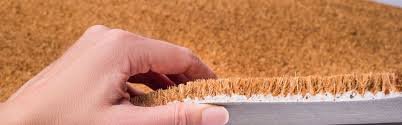
Why Do the Corners of Rubber-Backed Mats Curl?
Before we jump into the quick fixes, let’s look at the science behind why this distortion happens in the first place. Understanding the root cause will help you maintain your mat better and prevent the curl from returning in the future.
Most modern coir doormats aren’t just made of pure coconut husks; they feature a heavy-duty backing material made of either PVC (polyvinyl chloride) or vulcanized rubber. This backing is essential because it holds the stiff coir bristles firmly in place and provides a non-slip grip on smooth Indian tile or marble flooring. However, this dual-material design is also why curling occurs due to specific environmental factors:
1. Drastic Temperature Shifts and Sunlight Exposure
In India, our entryways are subjected to extreme weather. Whether it’s the scorching summer heat of Delhi, the intense humidity of Mumbai, or direct afternoon sunlight beating down on your balcony, the rubber or PVC backing expands slightly under high temperatures. When the temperature drops at night, the synthetic backing contracts. Because the natural coir fibers on top do not expand or contract at the same rate as the rubber underneath, the structural tension forces the edges to warp and curl upwards.
2. Uneven Drying Cycles After Cleaning
We Indians love washing our balconies and verandas with water. During rainy monsoons or regular house cleaning days, your mat inevitably gets soaked. If water gets trapped underneath the rubber backing while the top coir fibers dry quickly under the sun, the uneven rate of moisture evaporation warps the synthetic base, leading to stubborn, wavy edges.
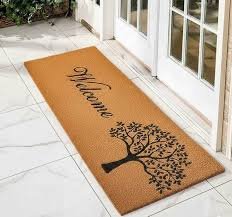
3 Foolproof Methods to Flatten Your Entryway Mat
If your mat has lost its flat shape, don’t panic. You do not need professional tools or expensive replacement treatments. Here are three highly effective, DIY methods on how to flatten a curled coir doormat safely right at home.
       [Curled Coir Mat]
               │
      ┌────────┼────────┐
      ▼        ▼        ▼
  [Method 1] [Method 2] [Method 3]
  Back-Roll  Hairdryer  Rug Tape
  & Weights    Hack       Fix
Method 1: The Back-Rolling and Weight Trick
This is the gentlest and most common restorative method. It relies on counter-stretching the rubber matrix and using gravity to reset the material’s memory.
Step-by-Step Instructions:
- Clean the Mat First: Take your coir mat outside and give it a good shake to remove trapped dust, sand, or loose coconut fibers.
- The Reverse Roll: Roll the mat tightly in the opposite direction of the curl. If the corners are curling upward, roll the mat inside-out so that the rubber backing faces outward and the coir bristles face inward.
- Secure the Roll: Tie a couple of old cloth strips or rubber bands around the rolled mat to keep it tightly bound. Leave it in this reverse-rolled state for at least 12 to 24 hours in a warm room.
- Apply Heavy Weights: Unroll the mat flat on your floor. Place heavy household objects directly onto the problematic corners. You can use heavy cookbooks, iron tawas, filled water buckets, or large decorative stones. Leave these weights resting on the corners for another 24 hours.
Pro-Tip for Indian Homes: Place the mat face down on your sun-warmed terrace or balcony floor for an hour before applying weights. The ambient heat from the floor tiles will soften the rubber backing, making the weight redistribution much more effective!
Method 2: Controlled Heat Exposure (The Hairdryer Hack)
If the back-rolling trick doesn’t completely level out a stiff PVC-backed mat, you need a bit of controlled thermal intervention. Applying mild heat softens the rigid synthetic backing material, allowing you to easily reshape it back into a flat layout.
Step-by-Step Instructions:
- Flip the Mat Over: Place the doormat face down on a flat, heat-resistant floor (like ceramic or vitrified tiles) so that the black rubber or PVC backing is facing up toward you.
- Apply Low Heat: Plug in your household hairdryer and set it to a medium or low heat setting. Never use high heat, as excessive heat can melt the PVC or crack natural rubber.
- Sweep Vertically and Horizontally: Hold the hairdryer about 6 to 8 inches away from the mat. Constantly move the nozzle over the curled corners and edges for 3 to 5 minutes. You will feel the stiff plastic backing become warm, supple, and pliable.
- Press and Cool: Turn off the hairdryer and immediately press the warm corners flat against the floor with your hands (use a thick cloth towel to protect your fingers) or step on it firmly with flat-soled footwear.
- Lock the Shape: Place a flat, heavy object over the warmed edge instantly. Let it sit covered until the backing cools down completely. The cooling process locks the backing material into its newly flattened shape.
Method 3: Heavy-Duty Double-Sided Rug Tape
If you have tried resetting the material but your high-traffic doorway causes the mat to warp again within days, you need a permanent anchor strategy. Utilizing high-traction, double-sided rug gripper tape is an excellent way to secure the mat firmly to the floor.
Step-by-Step Instructions:
- Prep the Flooring: Sweep and mop the floor area where your mat sits. Ensure the ground is completely free of dust, grease, and moisture, or the adhesive tape will not stick properly.
- Apply Tape to the Mat Base: Cut strips of heavy-duty, double-sided rug tape (easily available on Amazon India). Flip your coir mat over and apply the tape strips directly along the entire perimeter of the rubber backing, paying extra attention to the four corners.
- Peel and Secure: Peel away the protective paper backing from the adhesive strips.
- Press Firmly Downward: Carefully flip the mat back over and position it exactly where you want it. Press down hard on the corners and walk over the edges multiple times to activate the pressure-sensitive adhesive.
Safety Warning: Ensure the tape you buy explicitly states it is safe for your specific flooring type (marble, granite, tiles, or wood) so it leaves no stubborn glue stains or residue behind when you eventually remove the mat for cleaning.
Sourcing and Maintenance Guide for Coir Mats
| Maintenance Action | Frequency | Why It Matters | Expected Mat Lifespan |
| Dry Shaking / Beating | Weekly | Removes abrasive sand and dust that degrades backing | Extends life by 6–12 months |
| Sun-Drying (Rotational) | Monthly | Eliminates trapped humidity and moisture evenly | Prevents mold and corner warping |
| Position Flipping | Every 6 Months | Distributes walking pressure and sunlight wear evenly | Avoids localized curling |
Conclusion: Keep Your Entryway Safe and Welcoming
A curled doormat doesn’t just ruin the look of your home entrance—it presents a genuine safety risk for your loved ones. By understanding how to flatten a curled coir doormat safely using simple household hacks like counter-rolling, controlled hairdryer heat, or heavy-duty rug tape, you can easily restore your mat to its original, safe condition.
Keep your entryway well-maintained, protect your mat from getting waterlogged, and ensure your home stays both stylish and trip-free!
Are you currently dealing with a stubborn, curled mat at your doorstep, or did one of these household hacks work wonders for your entryway? Let us know your thoughts in the comments section below!
See Also
How To Flatten your Rugs Mats Easiest Way How to Make them Flat
Step by Step: How to make a Doormat
How to Fix a Fraying Coir Mat: Easy Ways to Extend Its Life
